Budgies and cockatiels are sociable ornamental birds that must never be kept on their own. Here you will learn what the aviary and its furnishings should look like, what the birds eat and how you can support them during the moult.
Keeping cockatiels the right way
Cockatiel fact file
- Origin: Australia
- Lifestyle: nomadic; they travel in flocks in search of food and water
- Size: approx. 30 cm from head to tail
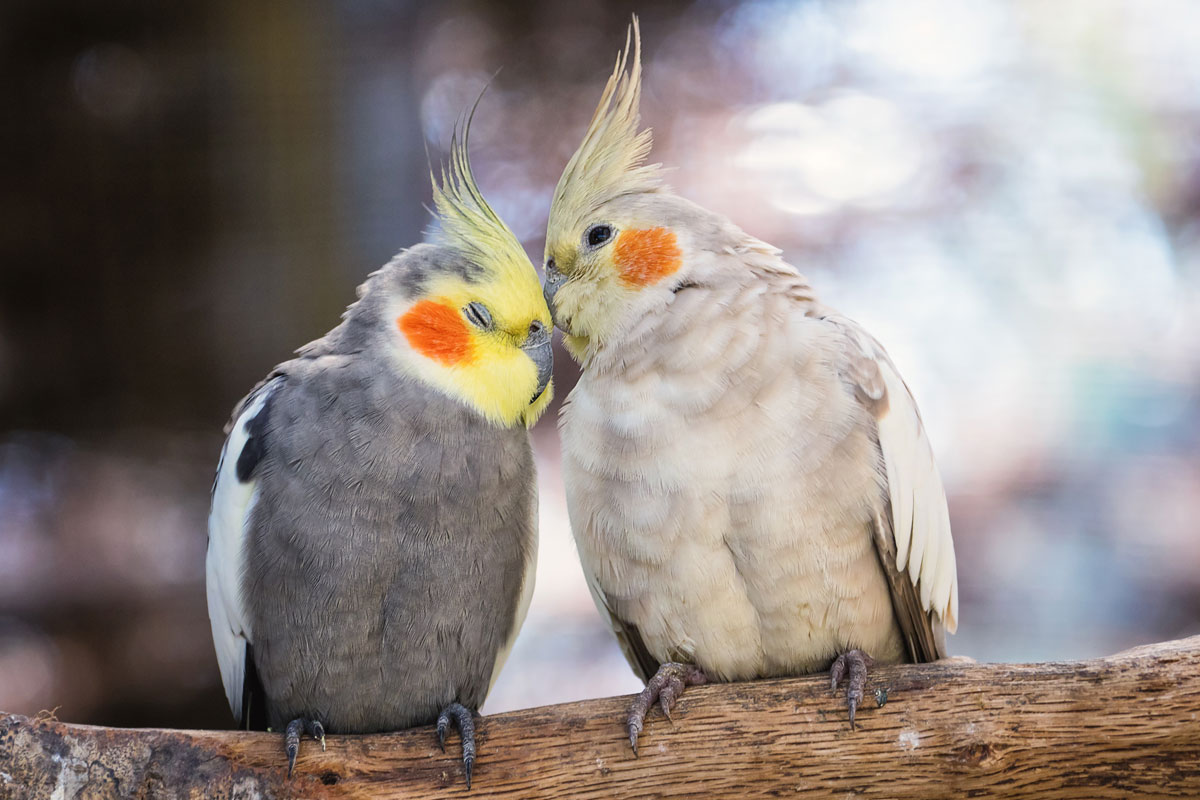
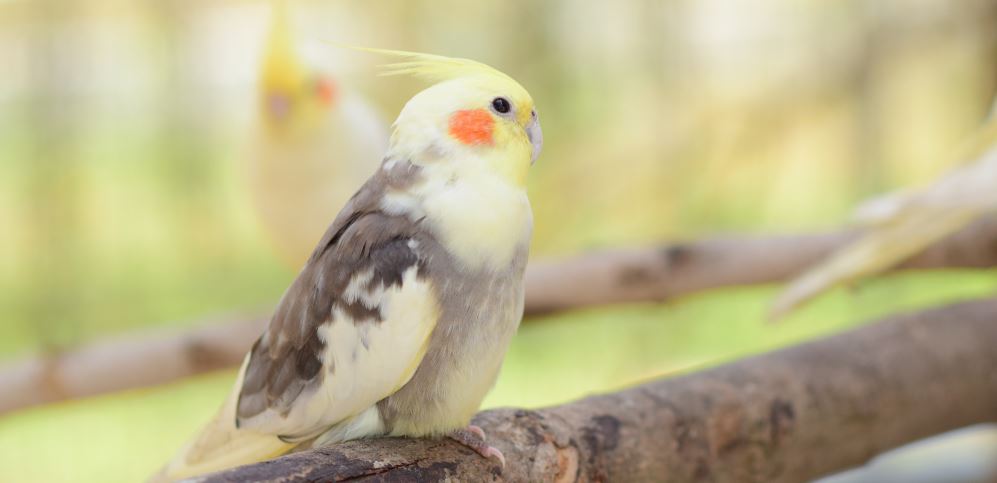
- Appearance: grey body plumage with white wing patches, yellow head feathers, orange ear patches
- Classification: cockatiels belong to the order of parrots (Psittaciformes) and the cockatoo family (Cacatuidae).
- Life expectancy: up to approx. 25 years
- Activity: diurnal (active during the day)

Aviary or bird room for cockatiels
In their native Australia, wild cockatiels travel in large flocks. Domesticated cockatiels are also very sociable and must not be kept alone. As they are very active birds and fast, agile fliers, they need to be housed in a spacious aviary or a bird room. For two to four cockatiels, Swiss Animal Protection recommends an aviary with a minimum floor area of 2 m² (100 x 200 cm) and a height of 2 m. At least a third of the volume must be free of structures so that the birds have enough room to fly. Wherever possible, though, the birds should be kept in larger aviaries.
Because cockatiels love to climb, the aviary bars should run horizontally. Place indoor aviaries in a quiet, bright spot, against at least one wall of the room. Aviaries that can be seen into from all sides cause the birds massive stress. Noise from a stereo or television should also be avoided. The aviary is best placed near a window, but not directly behind the glass.
Alternatively, you can keep your ornamental birds in a bird room. This offers the advantage of a large flight space, and the extra room makes it easier to furnish it in a species-appropriate way. Floors and furniture need to be protected from soiling with a sheet. To stop the cockatiels flying into the window pane, cover the windows with light curtains or insect screens. Rooms with wallpaper are unsuitable as a bird home, as cockatiels like to nibble at wallpaper.
Indoor aviaries and bird rooms need electric lighting. UV lamps run with a ballast, available from specialist shops, are suitable. As the UV output decreases over time, the lamps must be replaced regularly, usually after six months.
Legal minimum requirements for cockatiels
The legal minimum requirements are set out in the Animal Welfare Ordinance (Tierschutzverordnung). Please note that these are the minimum required by law and by no means ideal animal husbandry. By law, cockatiels must not be kept alone. For two to six birds, the following minimum dimensions apply: the floor area must be at least 0.5 m² and the volume at least 0.3 m³. For every additional bird, 0.05 m² of floor area is added. In enclosures smaller than 2 m², the ratio of length to width, based on the minimum floor area, may be 2:1 at most. The law also requires a bathing opportunity, springy perches of different thickness and orientation, plenty of natural branches and bird sand available for the birds to eat freely.
What do cockatiels eat?
This type of ornamental bird feeds mainly on grains and seeds. Specialist shops sell special seed mixes for cockatiels, which form the basis of their diet. In addition, offer the birds fresh food every day. Suitable options include greens (for example organic lettuce, dandelion) and organic vegetables (cucumbers, carrots etc.). Small pieces of fresh fruit (apples, pears, cherries etc.) and wild seeds (for example teasel, sorrel, nettles) are also readily accepted. For a complete diet, cockatiels regularly need small amounts of protein-rich food such as sprouted seeds, insects or boiled egg, usually once a week.
During the breeding and rearing period and during the moult, cockatiels have an increased need for nutrients and depend on a daily supply of animal and plant protein. As cockatiels also enjoy variety, their menu should always change a little. Water must be freely available to the birds and offered fresh every day. To keep seed food fresh, buy it only in small quantities. Also choose only food mixes without peanuts, as peanuts are very high in fat and often contaminated with mould spores.
How do you keep cockatiels occupied?
Pet birds in an enclosure are exposed to far fewer environmental stimuli than they would be in the wild. They therefore need plenty of enrichment. Cockatiels are best occupied when they can enjoy social contact with other cockatiels and live in a spacious, varied aviary or in a bird room. Fresh twigs and branches with buds, flowers and leaves make good enrichment. Regularly changed bird toys provide entertainment too. As cockatiels like to use their beaks to explore and work on materials, bird toys ideally consist of natural materials such as cork, wood, cardboard or fabric. Serving fresh food in a creative and varied way also adds variety.
Handling cockatiels correctly
Cockatiels are prey animals and quite skittish. Always approach the birds slowly and without sudden movements. Cockatiels are not cuddly pets; the real appeal of keeping them lies in watching them. If you approach them slowly and get them used to you with plenty of patience (and a few tasty titbits), they may become so tame that they fly onto your shoulder or climb onto your hand. Like all birds, cockatiels should only be held in the hand in exceptional cases, for example for an examination, and only for a short time. Being held is stressful for the bird.
Reproduction and breeding
Female cockatiels lay approx. four to six eggs and incubate them for a good three weeks. The young birds are independent after approx. eight weeks. Breeding cockatiels is a fascinating experience, but it also requires a good knowledge of the birds. Before you start breeding, you should already have several years of experience keeping cockatiels. If you want to rehome the young birds after breeding, you need to find reputable new owners in good time.
When kept as a pair, the female will sooner or later lay eggs. To avoid offspring, the eggs should be removed from the nest and must be replaced with plastic eggs. If you only remove the eggs and don't put in dummies, the female will keep laying new eggs, which weakens her over time.
Holidays and care
Birds are not suited to being taken on holiday. Transport and a change of location would cause them too much stress. Think before you buy about who will look after the birds every day while you are away. Unsupervised children are not suitable carers. Bird sitters should be briefed in good time about the individual birds and how they are kept. The carer also needs the phone number of the vet practice. The rescue centre for parrots and parakeets and some animal shelters also take in birds as holiday guests.
Where can you get cockatiels?
If you would like to keep cockatiels, it's best to ask at an animal shelter or a bird rescue centre first. There are always birds that have been given up by their previous owners. Another option is to buy cockatiels directly from a reputable breeder or a good pet shop. Reputable breeders and pet shops stand out thanks to species-appropriate husbandry and good advice. Never buy cockatiels online if you can't see the birds and how they are kept in person.
Source: Swiss Animal Protection STS
Keeping budgies the right way
The budgie is one of the most commonly kept bird species in Switzerland. With species-appropriate care, your ornamental bird can lead a long, happy life.
The budgie originally comes from the deserts and dry savannas of Australia, where it lives in huge flocks in the wild and is found in green and yellow colours. The first budgies were brought to Europe in 1840. Bred in a wide variety of colours, these ornamental birds found their way into many a living room, but for a long time they were kept completely wrongly. As late as the 1970s, you could buy a budgie in a pet shop and keep it alone in a tiny cage with meagre furnishings. If it was lucky, it was occasionally allowed a free flight around the flat. It is hardly surprising that these birds lived only a few years.
With species-appropriate care, your budgie can easily reach 10 to 15 years of age. Many keepers' attitudes have changed noticeably, and Swiss Animal Protection also promotes species-appropriate care of feathered pets with its guidelines.
Can budgies be kept on their own?
In the wild, budgies travel in flocks and must never be kept alone as pets. Swiss Animal Protection recommends keeping at least two pairs, ideally three or more pairs.
How big should your budgie's aviary be?
Budgies are agile fliers and should be kept in large aviaries or bird rooms. For two to four budgies, the Animal Welfare Ordinance requires an enclosure with a minimum floor area of 0.24 m² (40 x 60 cm) and a volume of 0.12 m³ (with a floor area of 0.24 m², that is a height of 50 cm). In addition, at least a third of the volume must be free of objects. This is the only way the birds have enough room to fly.
How should the aviary be set up?
Budgies love to climb. The aviary bars must therefore run horizontally. Also make sure the indoor aviary is in a quiet, bright spot, ideally against a wall. Budgies don't like it when all sides of the aviary can be seen into. Also avoid noise from a stereo or television.
As budgies need a lot of light, it's best to place the aviary near a window, but not directly in front of it. Because flats are often not bright enough, additional lighting is necessary. UV lamps available from specialist shops are suitable. When buying, be sure to get advice from an experienced breeder, a vet or well-trained sales staff.
How should the bird room be set up?
As an alternative to an aviary, you can also keep budgies in a bird room. There they have plenty of room to fly. Do protect floors and furniture from soiling with a sheet, though. To stop the budgies flying into the window pane, it's best to fit the windows with light curtains or insect screens.
How do you keep budgies outdoors?
Probably the most species-appropriate way of keeping budgies is an outdoor enclosure. It consists of an aviary adjoining a heated indoor section, for example a garden shed. Give your ornamental birds the freedom to choose whether they want to stay indoors or outdoors. Plants give budgies a sense of security. Part of the aviary should also be covered to protect the birds from rain and sun.
How do you furnish an aviary or bird room?
- Branches, ropes, swings or platforms hanging from the ceiling serve as perches for budgies.
- Sand, pebbles or natural products such as beech wood granules or cork granules are suitable as substrate.
- Offer the birds stomach grit in a shallow dish. The birds swallow these little stones, and they grind up the seeds they have eaten in the stomach.
- Give your budgies a shower by spraying the leaves of the branches with water. A budgie bath is a must, too.
- The position of the food and water bowls depends on how the aviary or bird room is furnished. The containers must be easy for all budgies to reach. To keep them from being soiled by droppings, don't place them directly under a perch.
- Cuttlebones and mineral blocks, hung on the bars, supply calcium and serve as a whetstone for the beak.
What do you feed your budgie?
Budgies feed mainly on grains and seeds. Specialist shops offer special seed mixes as a basic food. But make sure the menu has variety too:
- Greens: lettuce, dandelion, ribwort plantain, parsley, cress, chickweed
- Organic vegetables: cucumbers, carrots, kohlrabi, peppers
- Fruit: apples, pears, cherries, plums, rose hips, berries
- Wild seeds: seed heads of grasses, sorrel and nettles
- fresh buds and flowers
Of course, your budgies also need fresh water every day. You'll find more tips on species-appropriate care in the fact sheet from Swiss Animal Protection. In addition, all aviaries at Petcenter are labelled in line with the Swiss Animal Protection requirements.
How do you care for budgies and cockatiels?
The best protection against illness is to keep budgies and cockatiels in a species-appropriate way and feed them correctly. Many illnesses arise directly or indirectly from feeding or husbandry mistakes. You also need to pay attention to hygiene:
- Offer fresh food and water every day and throw away old leftovers.
- Clean food and water containers and the bath every day.
- Clean the aviary once or twice a week and replace the substrate.
- Disinfect the aviary completely about four times a year.
- If the birds are kept indoors, replace the UV lamps every 6 to 12 months (depending on the manufacturer).
Watch your birds every day, just like any other pet. Always take changes seriously. If in doubt, it's worth calling a vet practice that specialises in birds. If a bird is visibly ill and not eating, you must take it to a vet practice immediately.
Moulting in birds: how to support your birds
What is the moult?
When temperatures outside fall and the air becomes drier, many pet birds begin to moult. During this process, old, worn or damaged feathers are replaced by new ones. Depending on the species, this happens once to several times a year and is crucial for the birds' survival. An intact plumage is essential: without it, the birds cannot fly and are more susceptible to illness.
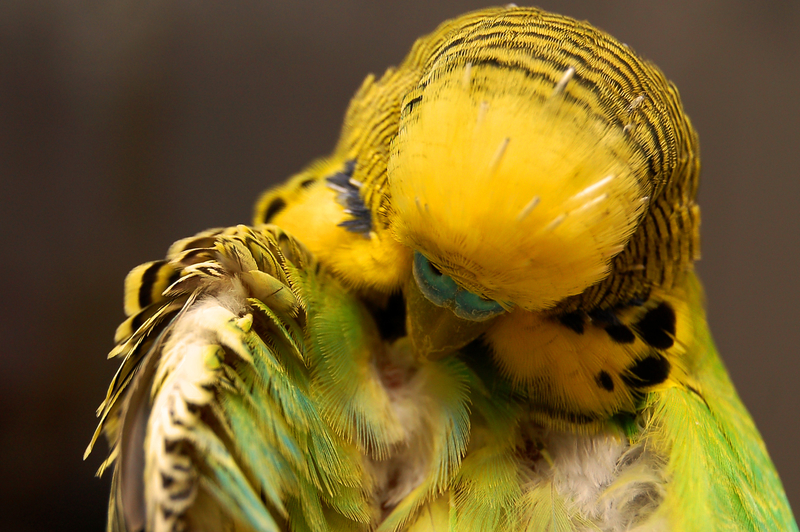
The moult is not an illness, but it can be very exhausting for birds and affect their wellbeing. Birds weakened by the moult have a higher risk of falling ill. It is therefore important to adjust their diet to their increased energy and nutrient needs.
How do birds behave during the moult?
A budgie can start moulting at any time, regardless of the season. The process is triggered by an increased release of hormones. Normally, the birds change their plumage two to three times a year. During the moult, many birds are calmer, while older birds tend to sleep more and sometimes react aggressively to disturbance.
How do you help your birds through the moult?
With the right care and an adapted diet, you can help make the moult less stressful for your birds. During this time, cockatiels depend on a daily supply of animal and plant protein. For extra support, there are moulting drops containing essential vitamins. They help the birds build their new feathers. There is also moulting salt, which is rich in minerals and valuable trace elements.
A simple trick: grate some carrots, add a little vegetable oil and mix everything well. The oil helps the birds absorb the vitamins they contain more effectively.