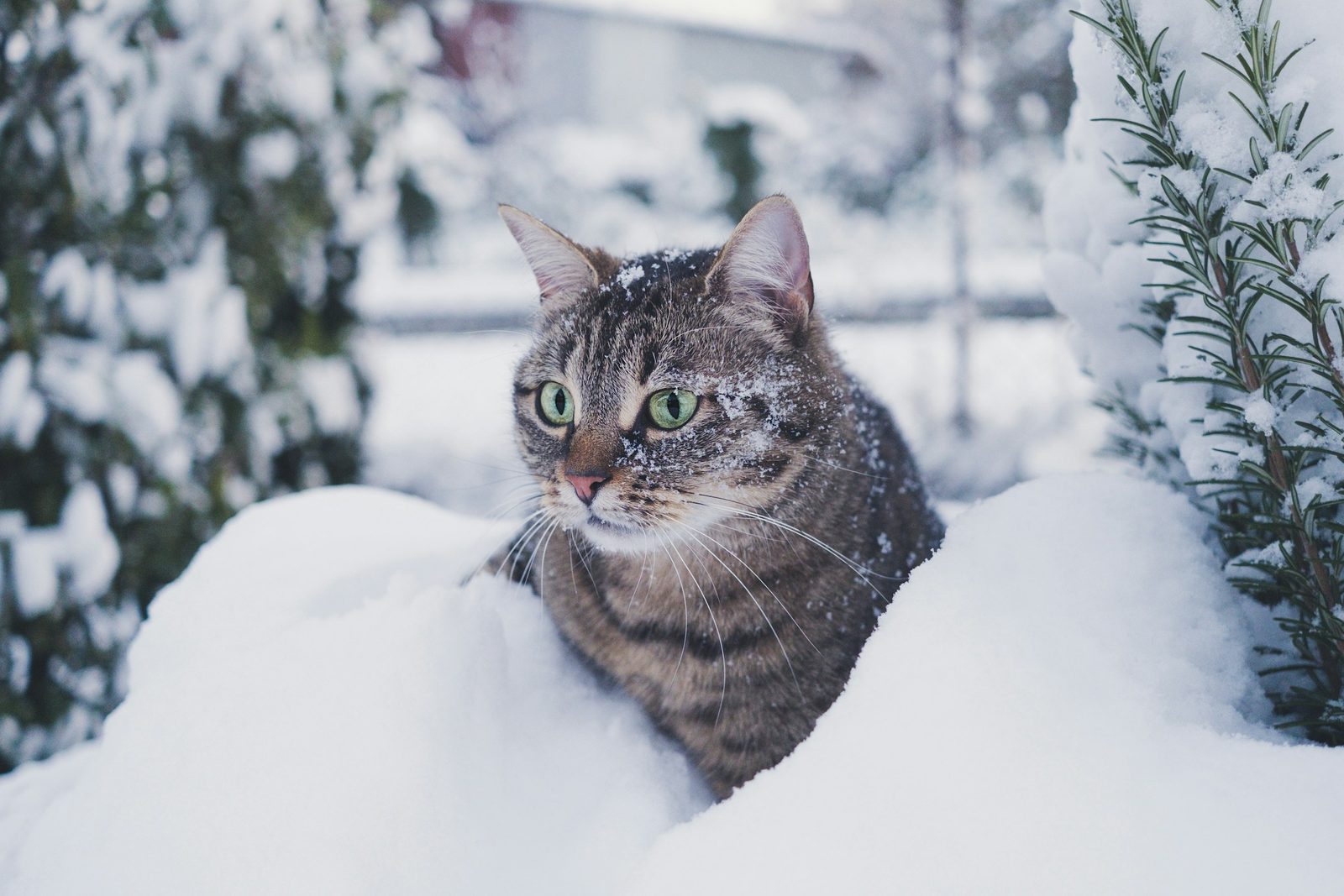
Outdoor cats cope with cold surprisingly well. What really gets to them is the combination of wet and wind, and having nowhere to warm up. A winterproof cat house solves exactly that: dry, sheltered from the wind, insulated and small enough for your cat to heat with its own body warmth. Here you will find out how to recognise a truly winterproof cat house, which size is right, where to put it and how to get your cat to actually use it.
Why do outdoor cats need a cat house in winter?
A cat's winter coat insulates well, as long as it stays dry. A wet coat loses much of its effect, and wind draws off even more warmth. A cat that spends hours outside in rain and bise (the cold north-easterly wind) gets chilled, even when the thermometer is still above zero. Older cats, very slim animals and cats that cannot get indoors at any time, because nobody is home or there is no cat flap, are particularly affected.
A cat house is therefore not a luxury, but a way for your cat to warm up and dry off when it needs to. That applies to your own cat, but also to the neighbour's cat that regularly turns up in your garden, and to strays that would otherwise seek shelter under a car or in the woodpile. If you regularly have a hedgehog in your garden, you should also know that it will happily move into an empty cat house. What to do then is covered in our hedgehog guide.
How do you recognise a winterproof cat house?
“Suitable for outdoor use” does not mean winterproof. A house that works as a shady spot in summer can be a cold wooden box in January. These features make the difference:
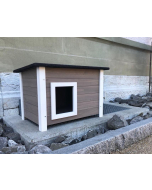
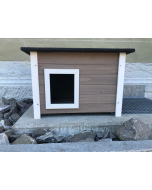
- Double walls with insulation: In the Oslo thermo cat house, the side walls, back wall and base are double-built and lined with polystyrene. The air inside stays warm instead of escaping through the wood.
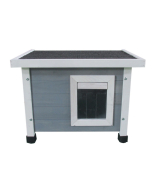
- Insulated floor: The cold comes from below. A house standing directly on paving stones or frozen ground loses the most heat there. Either the floor is insulated or the house stands on feet. The Carlo and Luis models have height-adjustable plastic feet for this.
- Weatherproof roof: A bitumen roof keeps rain and snow out and can be lifted off or opened up. That way you can get inside to clean it without taking the house apart.
- Treated wood: Wood-stained timber absorbs less moisture, does not swell and lasts several winters.
- Sheltered entrance: A swing door with slats or a PVC wind guard. More on that in a moment.
Which size is right?
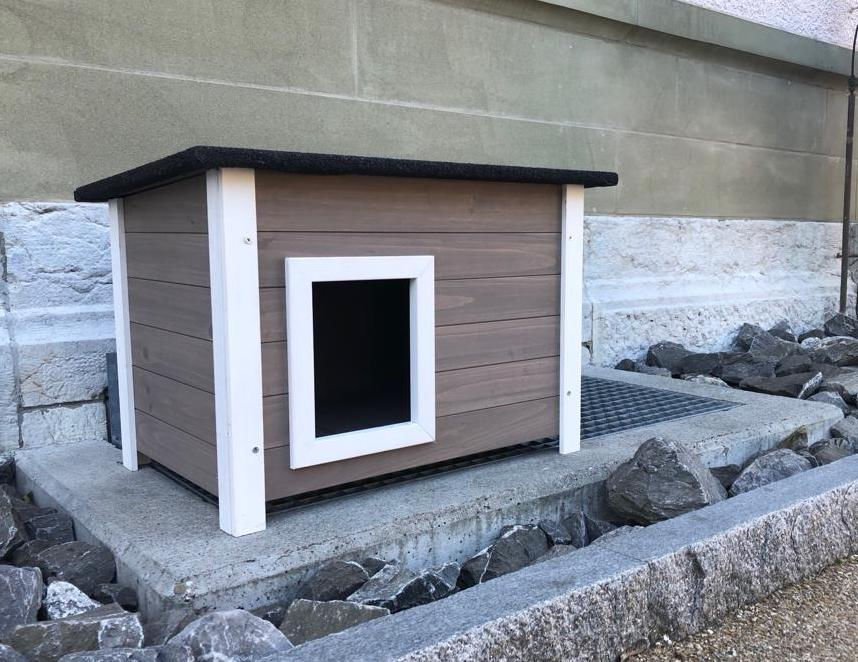
With cat houses, smaller is warmer. Your cat heats the interior with its body warmth. In a large house that warmth disappears; in a compact one it is retained. A lying area of about 45 x 35 centimetres is enough for an adult cat to curl up or stretch out. Carlo and Luis have exactly these interior dimensions, and the Oslo, at 60 x 40 centimetres externally, is similarly compact.
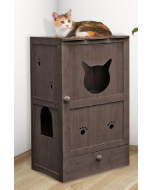
If you have two cats that get on, they will often share a house in winter and keep each other warm. If they are not that close, each needs its own retreat. The two-storey Zermatt cat house solves this with two separate, insulated levels: one cat lies downstairs, the other upstairs, and neither has to make way for the other.
What matters at the entrance?
The entrance is the weak point of every cat house. Through an open doorway, the wind blows straight onto the bed. Three things help:
- Keep it small: An opening of around 16 x 20 centimetres is plenty for a cat. Larger openings let more warmth escape and invite foxes or martens.
- Cover it: A swing door with slats, as on Carlo, Luis and Zermatt, closes by itself behind the cat. On the Oslo, a PVC wind guard does this job, and you can also retrofit it if needed.
- Turn it away from the wind: The entrance should never face the prevailing wind direction. In many regions of Switzerland the cold wind comes as the bise from the north-east, in others it is the westerly wind that brings the rain. Watch for a few days where the draught comes from at your place, and turn the house so that the back wall takes the wind.
Some cats are suspicious of a flap at first. Clip the slats up for the first few days or take off the wind guard until your cat knows the house. Then put it back.
Where is the best place for the cat house?
The location matters more than the model. An insulated house in a wet, draughty spot stays cold, while a simple house in the right place works. Keep the following in mind:
- Sheltered from the wind: Against a house wall, under an overhanging roof, behind a hedge or in a corner of the terrace. Not in the middle of the lawn.
- Dry and raised: Not in a hollow where water collects, and not where snow slides off the roof. A few centimetres of clearance from the ground, using feet, a pallet or bricks, keeps moisture away.
- With a good view: Cats like spots from which they can see their surroundings and which they can leave in two directions. A house in a narrow dead end is often avoided.
- Quiet: Away from the road, the garage driveway and the children's play area.
- Close to home: For your own cat, the spot next to the front door or under the window works well. It can warm up there and still let you know when it wants to come in.
If you have a cat flap, the cat house is an addition for days when your cat prefers to stay outside. Without a flap, it is the substitute while nobody is home.
What goes inside: straw, blanket or thermo mat?
The bedding determines whether the house stays warm or turns damp and clammy. Ordinary blankets and cushions soak up the moisture a wet cat brings in and no longer dry out in winter. After a few days, your cat is lying on a damp rag.
Two solutions have proven their worth:
- Straw: Insulates well, stays loose, and your cat can snuggle right into it. Hay, on the other hand, attracts moisture and goes mouldy. Replace the straw every few weeks.
- Self-warming thermo mat: An aluminium layer inside reflects body warmth back to the cat, with no electricity at all. The Thermo Mat in 50 x 40 centimetres fits all the houses mentioned here, has a non-slip base and is washable at 30 degrees. The Oslo and thermo mat set combines both.
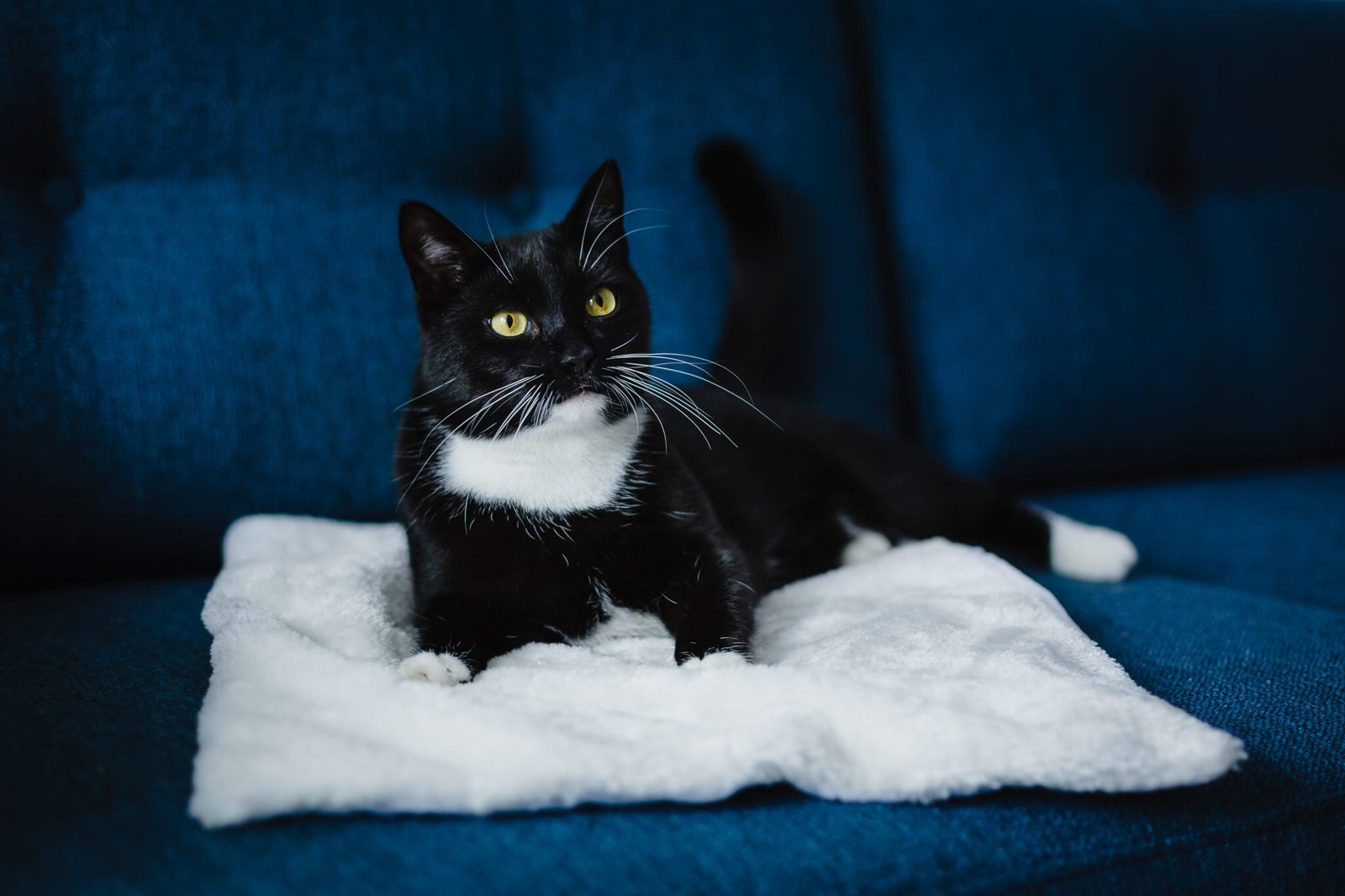
An electric heated mat is only an option if the house stands in a sheltered, dry spot and you can safely lay an outdoor cable. For most outdoor cats, the combination of insulation, wind protection and a self-warming mat is entirely sufficient.
How do you get your cat used to the cat house?
The most common mistake: the house goes into the garden at the first snowfall, and the cat is expected to use it straight away. Cats need time to check out a new object. So set the house up in autumn, when the nights are getting cool but not yet cold. By the first frost, your cat will long since have accepted it as its own place.
You can speed this up like this: put in a blanket your cat has already slept on, so that it smells of them. Now and then in the first few days, hide a few treats in the house. Leave the roof or the wind guard open at first so your cat can look inside. And do not put food in the house. Food attracts other cats, mice and hedgehogs, and your cat loses its retreat.
House or not, in autumn it is worth taking a look at the whole picture for outdoor cats. You can read about what else can be dangerous outside in Outdoor cat or indoor cat. And because more hair is shed with the winter coat, the moulting guide helps with brushing.
How do you look after the house over winter?
Once set up, a cat house needs little effort. Check the bedding every two to three weeks: if the straw is damp or the mat is dirty, replace or wash it. When it thaws, lift off the roof and check that the inside is dry. If water drips in anywhere, the roof has usually slipped or the house is standing crooked so that water runs onto the back wall.
In spring, empty the house completely, wash it out with warm water and mild soap and leave it to dry in the sun. Re-treat wood-stained timber with wood preservative every two to three years, and the house will last many winters. If you put it in the shade in summer, it serves as a cool retreat. If you look after wildlife in your garden in winter, you will find the perfect complement in our article on feeding wild birds.
Which cat house suits which cat?
A quick overview of our selection in the Cats Outdoor category:
- One cat, cold location, maximum warmth wanted: Oslo thermo cat house with polystyrene insulation in the walls and floor, delivered assembled. With the PVC wind guard and the thermo mat, it is the warmest solution in our range.
- One cat, sheltered location under an overhanging roof: Carlo or Luis. Both have a slatted door, Plexiglas window, opening roof and adjustable feet. Lined with straw or a thermo mat, they do the job well in a spot sheltered from the wind.
- Two cats, or one cat that likes a lookout: Zermatt with two insulated levels and a step. Sit and watch upstairs, sleep downstairs.
Frequently asked questions
When should the cat house go outside?
In September or October, as soon as the nights get cool. That way your cat has weeks to explore the house before it really needs it.
Does a cat house need heating in winter?
Generally not. An insulated house with a small entrance, wind protection and a self-warming mat retains your cat's body warmth. An electric heated mat only makes sense for very old or sick cats and in a safe, dry location.
Can I insulate a simple cat house myself?
Yes. Stick polystyrene panels to the inside of the walls and floor and cover them with thin wood or a mat so that your cat does not scratch at them. A dry, raised location is still essential. However, a house that is insulated from the ground up is more airtight and lasts longer.
Why won't my cat go into the cat house?
Usually the location is wrong: too open, too noisy, no view, or too close to other cats' food. Or the house is new and smells unfamiliar. Move it to a quiet spot sheltered from the wind, put a familiar blanket inside and give your cat two to three weeks.
What should I do if a hedgehog moves into the cat house?
Let it stay. A hedgehog that moves into a cat house in late autumn has found a dry hibernation spot. Set up a second house for your cat and do not disturb the hedgehog until spring.
In brief
- Wet and wind are the problem, not the cold. A cat house must be dry, sheltered from the wind and insulated.
- Double walls, an insulated or raised floor, a bitumen roof and a small, covered entrance make a house winterproof.
- Small is warmer: your cat heats the house itself. For two cats, choose a two-storey model.
- Place it against the house wall or under an overhanging roof, raised, with a good view and the entrance turned away from the wind.
- Straw or a self-warming thermo mat rather than blankets, and no food in the house.
- Set it up in autumn and introduce it with a familiar blanket and treats.