
Hiking with your dog is a shared experience in nature, but to make sure it ends well for both of you, you need a little preparation: the right gear, respect for pastures and wildlife, and a feel for when your dog has had enough. Autumn is a particularly pleasant time to hike, when it is cool, the trails are quieter and there are hardly any ticks lurking at higher altitudes.
Is your dog ready for the tour?
Not every dog is a mountaineer. Your dog should be healthy, fit and old enough for the planned route, and it is best to always adapt the hike to your dog. Young dogs should only do longer tours with lots of climbing once they have finished growing: from around twelve months for small breeds and more like 18 months for large breeds. Before that, steep descents put too much strain on their joints. Older dogs can definitely hike, but they need flatter routes and more breaks.
A good test: how is your dog the day after a two-hour hike? If he gets up bright and lively, a longer tour is possible. If he is stiff or tired, stick to shorter walks and build up slowly. If your dog has a short nose, heart problems or is overweight, talk to your vet before the first mountain tour.
How do you choose the right route?
Decide in advance whether you are only heading out for a few hours on well-maintained paths or planning a full-day tour on stony, demanding trails, as your packing list depends on it. Swiss hiking trails are well marked, but not all of them are suitable for dogs. When planning, pay attention to three things:
- Ladders and steps: Mountain trails with ladders, rope sections or high rock steps are not doable for most dogs. On hiking maps, such sections are marked as white-red-white mountain trails. If in doubt, stay on the yellow hiking trails.
- Alpine pastures and livestock guardian dogs: In autumn, many alpine pastures are still grazed. On pastures with livestock guardian dogs, the rule is: dog on the lead, go around the pasture if possible, stay calm and give the guardian dogs time to size you up. Signs along the path show where herds are protected.
- Wildlife quiet zones and hunting season: From September to December it is hunting season in many cantons. In forests and wildlife quiet zones, a lead is often required, in some places all year round. Check with the canton or on the information signs at the starting point before your tour.
How do you cross cow pastures properly?
The most common conflict when hiking with a dog happens on pastures with suckler cows. Cows see a dog as a wolf and defend their calves. Stick to these rules: keep your dog on a short lead, cross the pasture quickly and keep your distance from the herd, and never get between a calf and its mother. If the cows approach you in a threatening way anyway, unclip your dog's lead and calmly keep walking yourself. The cows will follow the dog, and he is faster than they are. It is best to find a way around the pasture, though.
What gear belongs on a hike?
Whether it is a short or a longer hike, a few things should always be in your pack.
On your dog
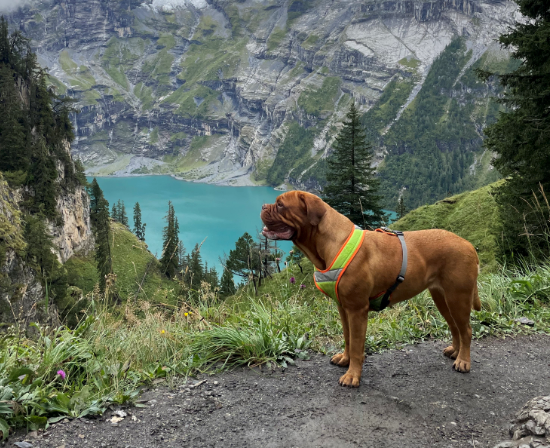
A well-fitting harness is preferable to a collar on hikes. It distributes the pull across the chest and does not put strain on the neck. You can also use the handle on the back to help your dog over a step or hold him steady when things get tight. Models such as the Truelove Zeus or the lighter Gaia have exactly this handle and are padded.
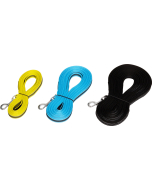
You will also need a lead two to three metres long that you can attach to a waist belt so your hands stay free. In many areas a lead is compulsory. In open countryside, a long line can also be useful to give your dog more freedom.
In the rucksack
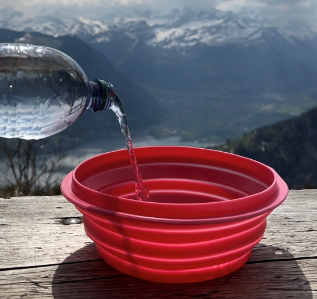
- Water and bowl: Mountain streams are not available everywhere and are often polluted on alpine pastures. Allow half a litre per ten kilos of dog per hour in warm weather. A collapsible silicone bowl weighs next to nothing.
- First aid kit: Tick remover, bandage, paw balm, disinfectant. A ready-made kit for dogs contains everything you need for a cut paw or a tick. Add a copy of the vaccination record.
- Paw boots: Not for every tour, but a pair in your rucksack saves the walk back if your dog cuts a paw. They also protect sensitive paws from sharp stones, hot ground or rough terrain. Find out more in the paw protection section.
- Snacks and food: Small, nutritious snacks for breaks. Longer hikes use up energy, so on day tours also pack enough food. Do not feed a large meal right before or during the tour, though, as it puts a strain on the stomach.
- Poo bags and a towel: Also up on the alp. Poo bags belong in the nearest bin, not at the side of the path.
- Rain protection: The weather turns quickly in the mountains. A raincoat is worth it for short-haired dogs and for any dog who would get cold in a wet coat on the way back. You can find more models in the rainwear section.
- Muzzle: If something happens to you on the way and you depend on rescue services, your dog will only be taken along with a muzzle.
A hip bag is handy for snacks, poo bags and your phone, so you do not have to take off your rucksack for every reward.
Extras for longer or more demanding tours
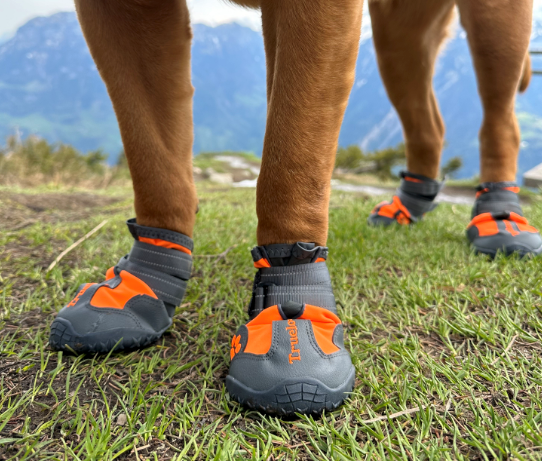
- Dog boots and paw balm: The boots protect against rough terrain, while the balm helps keep cracked or stressed paw pads supple.
- Sleeping bag or sleeping mat: If you take a longer break or camp out in nature, your dog needs a warm, insulating place to lie down.
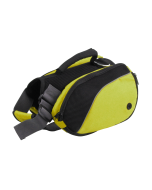
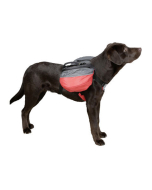
- A rucksack your dog carries: If your dog gets his own dog backpack to carry, the pockets should be filled with equal weight so it sits comfortably.
A carrier rucksack for small or injured dogs?
For small dogs, seniors or dogs that can no longer walk the whole distance after an injury, a dog carrier rucksack is the solution. It lets you carry your dog over a steep section or for the last kilometre home. Check the manufacturer's weight limit, and look for a firm base plate and ventilation. The deek Montana has exactly that and can be used at home as a den, so your dog gets used to it.

What should you look out for on the way?
On a hike, dogs easily cover double the distance because they run back and forth. So plan a break in the shade every 60 to 90 minutes, offer water and check the paws. Make sure your dog drinks regularly and does not overexert himself. Give him breaks in the shade and avoid the midday heat.
Signs that your dog has had enough: he walks behind you instead of in front, lies down at every opportunity, pants heavily in cool weather or changes his rhythm when walking. On warm days, heavy panting, sluggishness or unsteadiness when walking can indicate overheating. Then it is time to head back, not to reach the summit. Rough paths with lots of scree can injure sensitive paws: if your dog limps or is reluctant to keep going, check his paws and take a break.
On the descent, the rule is: slowly. Most injuries happen going downhill, when the dog runs ahead and brakes on the scree slope. Put him on the lead on steep sections.
What belongs after the tour?
Check paws, ears and armpits for ticks and grass seeds. Ticks are active until the first frosty nights, and at lower altitudes all through autumn. Wash salty or dirty paws with lukewarm water and only give your dog a full meal an hour after the exertion. A quick brush does double duty in autumn: it removes burrs and supports the coat change.
Frequently asked questions about hiking with your dog
How many kilometres can a dog hike?
A healthy, trained medium-sized dog can manage 15 to 20 kilometres with moderate climbing. Untrained dogs, small breeds and seniors are well served by 5 to 10 kilometres. Build up the distance over several weeks.
Does my dog have to be on a lead when hiking?
In wildlife quiet zones, during hunting season in many forests, on alpine pastures with livestock and in nature reserves, yes. The rules differ from canton to canton. If in doubt: keep the lead on. It protects wildlife, livestock and your dog.
Does my dog need a coat in autumn?
Short-haired, slim and older dogs get cold quickly in wet and windy conditions, especially during breaks. A light raincoat is worth it for them. Dogs with a dense undercoat do not need one.
What should you do about a cut paw?
Rinse the wound with water, apply a bandage from the first aid kit and put a paw boot over it. This will get your dog back under his own steam. Have deep cuts looked at by a vet afterwards.
Can my dog drink from mountain streams?
From flowing, clear streams above pastures, usually yes. Avoid standing water, cattle troughs and streams below alpine pastures, as there is a risk of diarrhoea-causing pathogens.
In short
- Choose yellow hiking trails, avoid mountain trails with ladders and check the canton's hunting and lead rules.
- Cross cow pastures at a distance, with your dog on a short lead, and unclip him if the cows attack.
- Harness with a handle, water, bowl, first aid kit, paw boots, snacks, rain protection.
- Take a break every 60 to 90 minutes, go slowly downhill and do a tick check after the tour.
- You will find all the gear in our outdoor world.
More for the cooler season: Making your dog visible in the dark and Coat change in dogs and cats.