More and more dog and cat owners are turning to BARF, the biologically appropriate raw food diet. In this guide you'll find out exactly what BARF is, how it works and what benefits it can have for your four-legged friend's health.
What does BARF actually mean?
BARF is an acronym, and it is interpreted in different ways:
- Bones and raw food (bones and raw foods)
- Biologically available raw food (food that is biologically available)
- Biologically appropriate raw food (the original German interpretation)
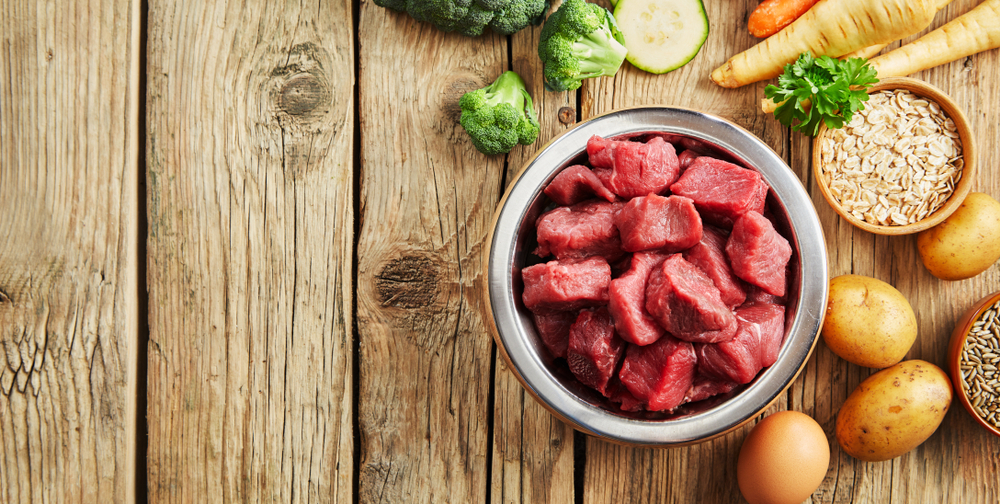
They all mean the same thing: dogs and cats get fresh, unprocessed ingredients that follow their natural prey as closely as possible. The bowl contains mainly raw meat, offal, bones, vegetables, a little fruit and healthy oils. Their daily food should look the way it would in nature, just adapted to the living conditions of our pets today.
Why are dogs and cats carnivores?
BARF is a counter-movement to industrial ready-made food. This was developed after the Second World War, when meat was scarce and pet food consisted mainly of grain. Even though meat is long since no longer a rarity, the composition of many foods has stayed similar. Grain or grain substitutes are still a very large component of many dry foods, up to 80 % in some product lines.
You may wonder what's so bad about that. After all, a dog is no longer a wolf and a cat is no longer a wildcat. But wolves and wildcats are carnivores. When the wolf joined humans, it lived off the animal remains of the hunt: bones, entrails, eyes and more. In the wild, wolves and wildcats eat almost the whole prey animal raw, including bones, offal and the pre-digested stomach contents (berries, grass, herbs).

It takes around 10,000 years for a digestive tract to adapt completely. That hasn't happened with dogs and cats: their digestive system still works like that of their wild ancestors. This is why they can digest raw food better and faster than dry food. Ingredients such as grain don't belong in their natural diet.
What are the benefits of BARF?
Ready-made food is convenient: open the bag, put the daily portion in the bowl, done. But have you ever taken a close look at what is actually in your pet's food? Grain and grain by-products are often just cheap fillers. With BARF, on the other hand, you know what goes into the bowl and don't have to worry about chemicals, flavour enhancers or vague labelling.
- You offer a wider range of nutrition with different types of meat, offal, bones, seasonal vegetables and fruit.
- You alone control what your dog or cat eats.
- With tripe (the stomach of ruminants, for dogs only) and bones, your four-legged friend occasionally has to work for their food rather than just eating «lazily» from the bowl.
Many pet owners also report these changes after switching:
- shinier coat and less body odour
- firmer and noticeably smaller amounts of stool
- more energy and joy in life
- less tartar, bad breath and flatulence
- better weight control
- lower risk of allergies or chronic illnesses
These effects come from avoiding artificial additives, preservatives and unnecessary fillers. Instead, your pet gets natural nutrients in their best form: fresh, raw and unadulterated. The amount of stool has a lot to do with the quality of the food. If almost as much comes out the back as goes in the front, it's worth taking a critical look at the ready-made food.
A shinier coat
A shiny, soft coat is often the first thing BARF beginners notice in their pet. The high proportion of raw meat and healthy oils such as salmon oil provides omega-3 and omega-6 fatty acids, which nourish skin and coat from the inside. Many owners notice less dandruff and less itching. Switching is especially worthwhile for dogs with sensitive skin or cats with a dull coat.
Strong bones and joints
A balanced BARF plan provides the important nutrients for a healthy skeleton, above all calcium, phosphorus, magnesium and vitamin D. Growing young animals and seniors in particular benefit from this. Dogs with joint problems such as arthritis can be supported with supplements like green-lipped mussel, collagen or MSM in their BARF food.
Digestion and gut
The natural composition and the absence of artificial additives take the strain off your pet's digestive tract. The result is smaller, firmer stools, less flatulence, better nutrient absorption and less bad breath. The gut microbiome, meaning the «good» bacteria, is strengthened by a natural diet. As a large part of the immune system is located in the gut, the body's defences benefit too.

A stronger immune system
A pet that is well nourished all round falls ill less often. Among other things, BARF provides:
- zinc (important for skin and immune defence)
- vitamin C (from fruit and vegetables)
- antioxidants such as vitamin E
- natural enzymes and secondary plant compounds
These substances help the body to fight free radicals, reduce inflammation and recover more quickly from infections.
Weight and energy
After switching their pet's food, many owners report more enjoyment of exercise, less excess weight, better muscle tone and more stable blood sugar levels. BARF avoids sugar, grain and hidden fillers. Instead, high-quality protein goes into the bowl, ideal for active pets, sporting dogs or cats with plenty of energy.
Dogs and cats with allergies, intolerances or metabolic disorders also often end up with BARF. You can read more in the guide BARF for allergies and intolerances.
Who is BARF suitable for?
In principle, all healthy dogs and cats can be fed BARF, regardless of age, breed or activity level. What matters is that the ration is balanced and tailored to the individual animal. Pets with special needs or health conditions also often benefit from a fresh, adapted diet.
Careful planning is especially worthwhile for puppies, seniors or pets with health problems.
What belongs in a balanced BARF plan?
A typical BARF meal consists of several components which together make up a complete and balanced diet:
| Component | Share of the ration |
|---|---|
| Muscle meat | approx. 50 to 60 % |
| Offal (e.g. liver, kidney) | approx. 10 to 15 % |
| Raw, meaty bones | approx. 10 to 15 % |
| Vegetables and fruit | approx. 20 % (significantly less for cats) |
| Supplements (e.g. salmon oil, cod liver oil, seaweed meal) | as needed |
Depending on the animal and life stage, these values can be adjusted slightly. What matters is that the food provides all essential nutrients, i.e. proteins, fat, vitamins and minerals. To get started, it's worth having a BARF plan drawn up by a BARF nutrition consultant. This gives you confidence and helps you put the meal together correctly. You can find out more about the composition in the guide BARF for dogs: what goes in the bowl? and about supplements in Which supplements are needed?.
Is BARF expensive or time-consuming?
Many people are put off because BARF seems too expensive, too time-consuming or too complicated. Some of these arguments don't stand up to a closer look:
- Cost: At first glance, BARF seems more expensive. But if you compare the meat content and the quality of the ingredients with a high-quality dry food, the difference quickly shrinks.
- Vet: Many owners report that they need to visit the vet much less often after switching. There are also natural alternatives for worm prevention and protection against parasites such as ticks, which can be easily built into the diet.
- Time: Preparing the BARF mix fresh every day is time-consuming. But you can prepare a large batch and freeze it in daily portions. As with cooking, with a little practice and good preparation BARF is quick and easy. Vegetables and fruit can be prepared for the whole week in one go and frozen.
- Shopping: Shopping normally takes no extra time. Instead of dry food, you buy meat and the rest from a specialist retailer or order it conveniently online. BARF meat often comes in practical packs of 200 to 250 g that you only need to defrost and mix with the rest. You pick up fruit and vegetables at the supermarket.
- Time pressure: If you need something quick or want to make things easier for your pet sitter on holiday, BARF mixes are a fast and simple option.
What are the disadvantages of BARF?
Especially at the beginning, preparing the meals can take a while. It's not uncommon for some owners to go back to the familiar ready-made food for this reason. But over time you'll become more confident and quicker. To gain confidence with raw feeding, there is useful reading with practical tips. At the start, advice from a pet nutrition expert can also help. Regular shopping at the supermarket, farm or specialist retailer simply becomes part of your routine.
How do you make the switch to BARF?
If you currently feed dry food, you should make the change to BARF gradually. Many pets react sensitively to a sudden change, and introducing new ingredients slowly helps to avoid digestive problems. You'll find a step-by-step guide in Switching to BARF.
Some owners start with ready-prepared BARF menus, while others put the meals together themselves from the start. Both are possible, as long as the rations are complete and meet your pet's needs.
Conclusion: feeding more naturally is worth it
BARF is more than a nutrition trend. It's a return to natural, fresh feeding. When it comes to feeding dogs and cats, we carry the responsibility, because our pets can't decide for themselves. Once you've got to grips with the basics, you'll quickly realise: you don't need an industrial product to feed your dog or cat in a species-appropriate way. With a little knowledge, planning and observation, your four-legged friend will love the change, and you'll see it in their health.
The Petcenter team will be happy to help with further information on BARF. There are also nutrition plans tailored to your dog or cat, as well as helpful reading.
Learn more about BARF: