In autumn, dogs and cats lose their summer coat, and for six to eight weeks hair turns up on the sofa, the carpet and your clothes. Moulting is natural and important for your pet's health. With the right care you can noticeably shorten this phase, and your pet will feel better too.
Why does moulting happen?
Dogs and cats usually moult twice a year, in spring and autumn. This is how they adapt to the seasons:
- In spring they shed their dense winter coat so they don't overheat as temperatures rise.
- In autumn they shed the summer coat and grow a denser undercoat to get through the winter comfortably.
Moulting isn't controlled by temperature but by light. As the days get shorter, the body releases more melatonin. This is the signal to shed the summer coat and grow a denser undercoat. That's why moulting starts reliably in September for most animals, regardless of whether the autumn is warm or cool.

In indoor cats and dogs that spend a lot of time inside, the rhythm often shifts. Artificial light and a constant room temperature mean that moulting is less pronounced but spread across the whole year. That's no cause for concern, but it makes regular brushing all the more important.
How long does moulting last and how can you tell it has started?
Expect six to eight weeks. The duration depends on several factors: breed, age, state of health and whether your pet spends a lot of time outdoors or is more of a homebody. For breeds with a dense undercoat, such as the Bernese Mountain Dog, Australian Shepherd, Maine Coon or Norwegian Forest Cat, it can take longer and mean considerably more hair. Short-haired pets shed too, it's just less noticeable because the hair is shorter and finer.
Typical signs of moulting are:
- increased hair loss
- a dull, lacklustre coat
- small knots or mats, especially in long-haired pets
All of this is normal as long as your pet seems healthy and the skin looks fine.
What do dogs and cats need during moulting?
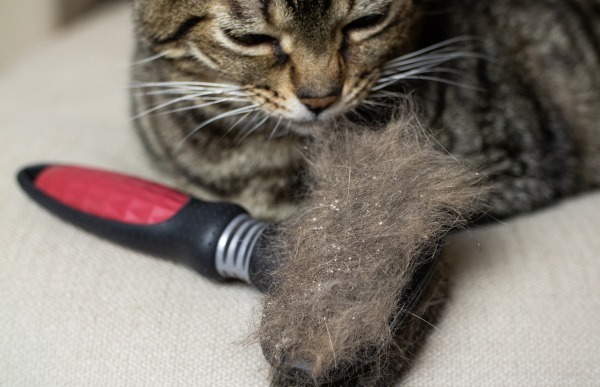
Cats groom themselves and swallow a lot of loose hair in the process. The result is hairballs, which in the worst case put a strain on the digestive tract. If you brush your cat daily during moulting, you remove the hair before it ends up in the stomach. That's the main reason why brushing is more than cosmetics for cats.
Dogs don't groom themselves. With them, the aim is to remove the dead undercoat from the fur before it mats. Matted patches pull on the skin, can become inflamed and later can only be cut out.
1. How do you brush properly?

Twice a week is enough in normal times. During moulting, daily is fine. Five minutes is enough if you do it regularly. Regular brushing not only removes loose hair but also stimulates circulation in the skin, which further supports the moulting process.
- Short coat: rubber curry comb, grooming glove or a soft rubber brush. They pick up loose hair without irritating the skin and also give a little massage.
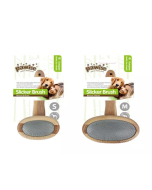
- Medium to long coat: slicker brush with bent pins. It reaches the undercoat without pulling out the top coat.
- Dense undercoat: undercoat brush or undercoat rake, followed by a soft brush. This thoroughly removes dead hair without damaging the top coat.
Always start at the back and work your way towards the sensitive areas: belly, inner thighs, behind the ears. Mats form there first, but the skin is also at its thinnest there.
If you come across a knot, don't pull on it. A detangling spray softens the area, after which it can usually be worked loose with your fingers and the brush. For large matted areas, the dog groomer is a better choice than scissors.
2. How do you care for the skin and coat?
Frequent bathing does more harm than good, as it washes out the natural oily film and dries out the skin. If you do bathe your pet, use a shampoo made for animals and no more than once every few months.
Grooming products that are applied after brushing make more sense. A coat conditioner makes the coat silky and supple so fewer knots form. For in between, for example after a walk or for dirty paws, wet wipes or grooming gloves do the job.
3. How do you support your pet from the inside?
Fur is made up of around 90 per cent keratin, a protein. During moulting, the body produces a complete new layer of hair within a few weeks, and the need for high-quality protein and certain nutrients rises accordingly. A protein-rich, balanced diet is therefore especially important.
- Omega-3 and omega-6 fatty acids support the skin barrier, shine and coat health. Salmon oil is easy to add to the food, as is linseed oil.
- Evening primrose oil provides gamma-linolenic acid, which helps with dry, flaky skin, for example in the Dr. Berg skin and coat oil.
- Biotin and zinc are involved in keratin formation. They are contained in high-quality complete feed, but if the coat looks dull, a supplement can make sense. Brewer's yeast and eggs are also considered top ingredients for the coat.
BARF tip: If you feed raw, you often already have moulting under control. Fresh muscle meat provides the protein for the new layer of hair, offal provides zinc and biotin, and a splash of salmon or linseed oil covers the omega-3 fatty acids. During these weeks, aim for a slightly higher fat content and regular fish meals. You'll find frozen BARF, oils and supplements in the BARF shop.
Important: introduce oils gradually, starting with a few drops and increasing over a week. Too much fat at once upsets the digestion.
Two simple helpers come on top. Enough fluids help the body to carry away dead skin cells and support the whole metabolism. Exercise and fresh air boost circulation and promote natural moulting.
When should you go to the vet?
Moulting means that your pet loses hair evenly, the skin underneath looks healthy and behaviour is normal. It becomes a concern if:
- bald patches appear, especially symmetrical ones on both sides of the body
- your pet constantly scratches, licks or bites itself
- the skin is red, flaky or crusty
- shedding continues for months without new fur appearing
- tiredness, weight changes or changes in drinking behaviour are added to the picture
A check-up is also worthwhile if the coat is dull, greasy or flaky. Parasites, allergies or hormonal disorders such as an underactive thyroid can be behind it. These need to be investigated, not treated with grooming products.
What helps against hair around the home?
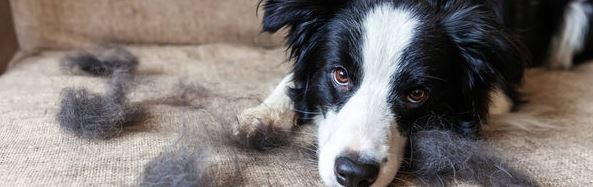
The best trick is the most obvious one: what ends up in the brush doesn't end up on the sofa. If you brush for five minutes every day, you'll save yourself a lot of vacuuming.
There are a few practical tips too: brush outdoors if possible, or on a blanket that you can shake out. A damp rubber-gloved hand pulls hair out of upholstery better than any vacuum attachment. And blankets on favourite spots are quicker to wash than a sofa is to clean.
Frequently asked questions about moulting
How often should I brush during moulting?
Daily, if possible. Five minutes is enough. For long-haired cats and dogs with a dense undercoat, daily brushing is the biggest lever during this phase.
My dog doesn't like being brushed. What can I do?
Keep it short, start with less sensitive areas and finish with a snack. Often the brush is the problem: a comb that is too hard on thin skin hurts. A softer model can sometimes change everything.
Does clipping help against shedding?
No. In dogs with an undercoat, clipping actually disrupts the natural coat change and can cause the fur to grow back unevenly. The exception is heavily matted areas, which a professional should remove.
How long does moulting last in cats?
Also six to eight weeks. Indoor cats, on the other hand, often shed a little all year round.
How soon do coat oils start working?
Expect four to six weeks. Hair grows slowly, so any effect only shows in the newly grown fur, not in the existing coat.
In short
Moulting lasts six to eight weeks and is triggered by daylight. Daily brushing with a brush suited to your pet's coat type is the most effective measure, and in cats it also helps against hairballs. Grooming products keep the coat supple, while omega-3 oils and a protein-rich diet support it from within. If you notice bald patches, severe itching or changes in the skin, your pet needs to see a vet.
You'll find suitable grooming products here: coat care for dogs, coat care for cats and complementary feed for skin and coat.
Image sources: Shutterstock, AI-generated, petcenter.ch