New Year's Eve and Swiss National Day on 1 August are a reason to celebrate for many of us, but for our animal housemates they are often pure horror. Loud bangers, bright flashes and unfamiliar smells cause great stress for dogs, cats and small pets such as rabbits or guinea pigs. With a little preparation, you can help your pet get through the night of fireworks safely and as calmly as possible.
Why are fireworks so stressful for animals?
What sounds like a party to us is sensory overload for animals. These factors play a particular role:
- Noise: Dogs and cats hear many times better than we do. Bangers and rockets therefore sound like explosions right next to their ears.
- Flashes of light: Unpredictable bursts of light cause disorientation.
- Changed atmosphere: Our own tension or excitement also rubs off on our animals.
- Unfamiliar smells: Burnt gunpowder, alcohol or incense sticks additionally irritate sensitive animal noses.
How can you tell your pet is stressed?
Every animal reacts differently. Watch out for the following signs:
In dogs
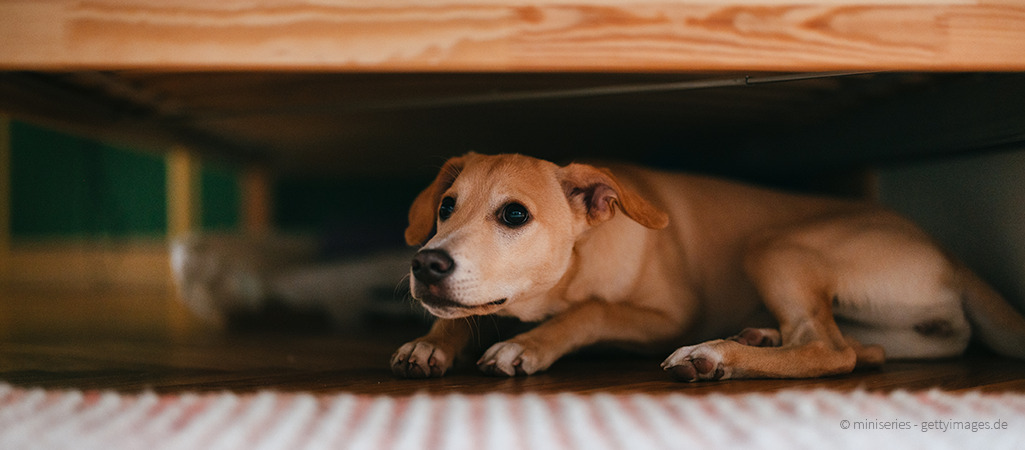
- Trembling, panting, whining
- Hiding or clinging to you
- Loss of appetite or restlessness
- Diarrhoea or toilet accidents
In cats
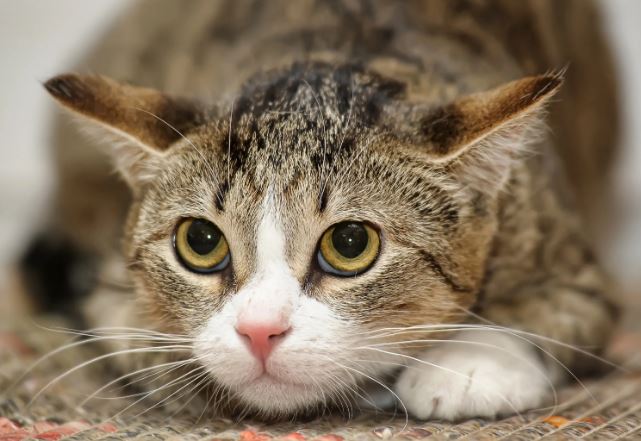
- Crawling under the bed or into a wardrobe
- Dilated pupils, tense body posture
- Hissing or scratching
- Urine marking
In rodents (e.g. rabbits, guinea pigs, hamsters)
- Freezing or panicked attempts to flee
- Thumping with the hind legs (e.g. in rabbits)
- Refusing to eat
- Aggressive or withdrawn behaviour
What can you do before the fireworks?
Create a safe retreat
A safe little spot is worth its weight in gold. Offer your pet a quiet zone in a room that is as dark and peaceful as possible. A cosy blanket, familiar smells and dimmed light all help. Your pet should already know the retreat and feel comfortable there. For small pets, it's worth darkening the enclosure with a cloth draped over it.
Bring outdoor cats indoors in good time
Keep your skittish outdoor cat at home in good time, ideally 1 to 2 days before and 1 to 2 days after the fireworks. Depending on where you live, the bangs start earlier and can drag on for days after the holiday.
Get walks done early
Take your dog out for one last long walk in the late afternoon or early evening, before the fireworks start. Once it gets dark, the bangers are often already going off. During this time, only go out on a lead and in familiar areas. Also make sure your dog has an up-to-date microchip and an ID tag with your contact details in case he runs off during fireworks. As an extra emergency measure, you can attach an address tag with your phone number to the collar, available for cats or dogs.
Use calming aids early
Natural remedies such as Bach flower remedies (e.g. the New Year's Eve Bach flower remedies), pheromone sprays or calming herbs can be supportive. Many owners use Bach flower remedies in the weeks before the fireworks; dose according to the instructions on the pack. As a spray or drops, they need to reach the mucous membranes directly, ideally in the mouth. It's best to get advice from a vet practice or an experienced specialist retailer.
Provide food and water
Some animals drink or eat less when stressed. Make sure they still have access to everything they need.
How do you get your pet used to loud bangs in the long term?
One long-term way to take away the fear of fireworks is to get your pet used to banging noises. With a sound CD, dogs and cats can be desensitised to fireworks and other disturbing noises as early as puppy or kitten age. Over several weeks, you play the various sounds only very quietly in the background from time to time. As soon as your pet accepts the sounds without any problem, you can gradually turn up the volume. Relaxing music also helps to slowly accustom the nervous system to loud noises.
What do you do during the fireworks?
Stay calm and don't leave your pet alone
Stay relaxed and composed, because your behaviour rubs off on your pet. Stay with them if you can, even if you want to celebrate. Your closeness and calm presence are soothing. If your pet feels safe in its hiding place, leave it there and don't try to coax it out.
Don't overdo the comforting
Don't ignore anxious behaviour, but don't reinforce it with excessive comforting either. Too much consolation can strengthen dogs and cats in their fearful behaviour. Stay calm and confident, as this gives them security. Retreat spots are quite enough. By all means, offer something to chew on or play with as a distraction. If your pet seeks protection from you of its own accord, you can give it: slow stroking or a gentle massage can help it settle.
Shut out noise and light
Close windows, shutters and curtains. This keeps the noise out and blocks the bright flashes of light. Leave soft music or the television on in the room to create a familiar, soothing background sound.
Chewing and licking for calm
Chewing reduces stress levels and keeps your pet sensibly occupied. Particularly recommended are beef scalp chews, which offer long-lasting chewing enjoyment. Licking is calming in a similar way to chewing: spread something especially tasty on a lick mat and give it to your dog. For an even longer-lasting activity, you can put the mat in the freezer for a few hours. The licking and the cooling effect provide additional calming.
Thundershirt for anxious dogs
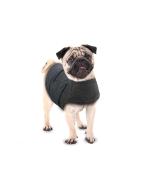
You can give anxious dogs protection and a sense of security with a Thundershirt. Thanks to its cut, it applies gentle, constant pressure to the chest and midsection. This pressure feels pleasant and has a calming effect on most dogs. The shirt can also be used during thunderstorms. It's important that it fits well and isn't too big, as this is the only way it can work properly. Get your dog used to the shirt before the fireworks so that he sees it as something positive.
Don't set off fireworks yourself
As a pet owner, you don't set off any rockets or bangers yourself.
What helps with extreme fear?
For dogs with extreme fear, retreating to a remote mountain hut can be the best solution. Far from the noise and bustle, you'll find the peace and quiet your dog needs.
Conclusion
Even if you can't take away every fear, your closeness, calm and care mean more to your pet than you might think. And that is exactly what makes the difference on a loud night.