Diarrhoea is very common in dogs and can have all sorts of causes. Here you'll learn how to recognise true diarrhoea, when to take your dog to the vet and what can support your dog. You'll also find the recipe for Moro's carrot soup and tips for digestive problems on a BARF diet.
See the vet immediately in cases of: blood in the stools, a puppy or an older dog, vomiting, apathy, fever.
Loose stools or diarrhoea: what's the difference?
First, work out whether your dog has loose stools or is really suffering from diarrhoea. If your dog goes as often as usual and behaves normally, it's loose stools. If your dog passes firm stools at the start of a walk and slightly softer ones towards the end, that points to normal bowel activity, as exercise gets the gut working harder.
It is definitely diarrhoea if your dog needs to go more often, is in pain (when passing stools or otherwise), strains for a long time even though nothing more comes out, can't hold it until you're outside, or is even apathetic and has a fever.
The good news: in the vast majority of cases, diarrhoea clears up by itself within two to four days with the right care. It becomes dangerous if your dog dehydrates through fluid loss. This happens faster in young dogs or older dogs with poor health.
When do you need to take your dog to the vet?
The next day, if your dog:
- has had diarrhoea for more than three days
Today, if your dog:
- is a puppy and frequently passes diarrhoea
- shows signs of dehydration (sticky, dry gums; a pinched fold of skin takes a long time to flatten)
- has bloody diarrhoea
- is losing a lot of fluid (frequently passes watery diarrhoea)
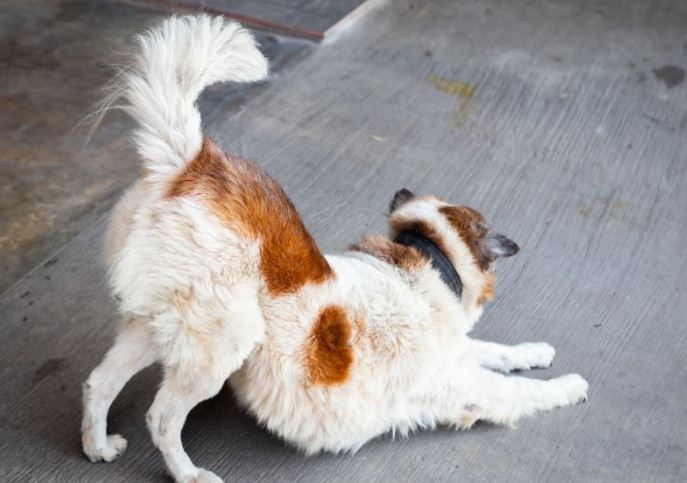
- has abdominal pain (moves slowly and stiffly, arches its back, adopts the “prayer position” with the front low and the rear high, or frequently strains hard to pass stools)
- seems very restless or listless
- isn't eating and/or isn't drinking
- vomits frequently
- has a fever above 40 °C (normal temperature for a dog: 38 to 39 °C)
How can you support your dog?
Many home remedies can contribute to getting your dog's digestion back on track, for example Moro's carrot soup (see below), boiled rice with chicken, a short fasting period or several small portions. There are also products you can mix into the food to support the gastrointestinal tract:
- Psyllium husks can support in cases of diarrhoea by absorbing excess fluid and improving the consistency of the stools. For constipation, the high crude fibre content aids digestion and makes stools softer, stimulating bowel movement. Psyllium husks can also support in cases of anal gland problems by firming up the stools and increasing their volume. They can support in cases of excess acidity too, as they are alkaline and bind surplus acids.
- Tree bark can naturally support the gut and the often over-acidic stomach. The blend can also support dogs that eat their own stools.
- Carob can bind water in the gut. Ingredients such as fruit sugar, fibre and minerals can support the gut with a restorative and strengthening effect. It is also very suitable for puppies and is free from cholesterol, lactose and gluten, which makes it suitable for allergy sufferers too.
- Magen-Darm-Intakt from Leiky is a supportive blend. It can support the regeneration of the stomach lining in cases of excess acidity, heartburn, gastritis, excessive grass eating, nausea, loss of appetite and vomiting. This powder can support in cases of acute digestive upsets such as diarrhoea. It is also well suited to puppies.

What is Moro's carrot soup and how does it work?
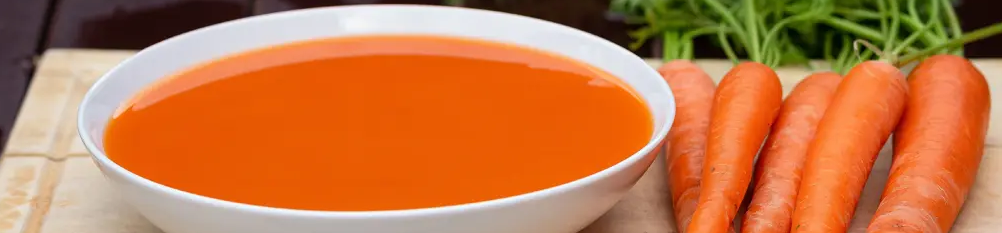
Moro's carrot soup can support in cases of diarrhoea in dogs. Its roots go back to the 19th century, and it is used in both humans and dogs. Cooking the carrots for a long time produces a special sugar molecule (oligogalacturonides). It attaches to the intestinal wall and removes the grip of intestinal parasites such as giardia. They are then excreted along with the food pulp, so the soup can contribute to cleansing the gut. A ready-made version is also available: the Morosuppe from Terra Canis.
How do you give the soup?
Always give the soup 30 minutes before a meal. This prepares the intestinal wall, so any food that follows gives intestinal parasites less to latch onto. In cases of severe, acute diarrhoea, it can even be advisable to give only the Morosuppe without any additional food.
How do you make the soup?
- Wash and peel 1 kg of carrots and cut them into pieces.
- Put them in a large pot with water and bring to a proper boil.
- Then simmer on a low heat for 90 minutes. If the water level gets too low, top it up.
- Drain the carrots (set the cooking water aside) and purée them.
- Add some of the cooking water (vegetable stock) to the purée and stir in 1 teaspoon of salt. The soup should be thick.
- Leave to cool and serve.
Tip 1: The finer you purée the carrots, the better the oligosaccharides reach the intestinal wall.
Tip 2: You can also make larger batches of the soup in advance and then freeze or preserve it.
What applies in cases of severe diarrhoea?
The soup can support in cases of stomach and bowel problems, but it doesn't replace a visit to the vet. If your dog has had severe diarrhoea for several days, be sure to see a vet.
What to do about digestive problems on a BARF diet?
Flatulence, diarrhoea or constipation are not unusual, especially at the start of BARF feeding. They show that the body is adjusting, and there are a few things you can tweak. The digestive tract reacts very directly to changes in diet, especially when switching from processed food, as the gut has to get used to fresh, unprocessed food. With BARF you know exactly what goes into the bowl and can respond to problems in a targeted way. If you're just starting out, our beginner's guide What is BARF? will help you put together a BARF plan.
Flatulence
Flatulence is often caused by vegetables that are hard to digest, portions that are too large or too much fat. For sensitive dogs, fermented vegetables often work wonders. Gentle herbs such as fennel or caraway can also bring relief; find out more in our guide to BARF supplements. Feed smaller portions and, for plant-based food, choose well-puréed, easily digestible vegetables such as carrot or courgette.
Diarrhoea when changing food
Diarrhoea can occur if too many new ingredients were introduced too quickly, or if offal, fat or meat quality doesn't suit your dog. A short break from food of 24 hours then helps, followed by lean meat and gentle side dishes such as Moro's carrot soup. For puppies, the same applies as above: if they frequently pass diarrhoea, go to the vet the same day. Stress also plays a role, so make the change as calmly and gradually as possible.
Constipation
If the stools are too hard or hardly anything comes out, there may be too many bones or too little fluid involved. Reduce the amount of bones, add water-rich vegetables such as pumpkin and put a little coconut oil or linseed oil in the food. Exercise helps too; sometimes all that's missing is a long walk.
Observe, don't panic
Your dog shows you through their stools exactly what is working well. Watch colour, consistency and regularity, because even small changes in the food can make a big difference. With a little patience and an understanding of how your dog reacts to different food components, digestive problems can usually be resolved easily. If you notice any of the warning signs above, though, your dog needs to see a vet.