When you're driving, securing your dog properly can save its life. At the same time, many people underestimate how quickly a car heats up: the outside temperature doesn't even have to be very high for the vehicle to become a heat trap for your dog. We'll show you which transport systems suit your dog and your car, at what temperature the danger begins, how to recognise overheating and what to do in an emergency.
How do you transport your dog safely in the car?
From a traffic law perspective, a dog in a car counts as "cargo". Under the road traffic regulations (Strassenverkehrsordnung), you must secure it while driving so that road safety is guaranteed at all times.
Keep this rule of thumb in mind: in a head-on crash at 50 km/h, unsecured cargo is accelerated to up to fifty times (!) its weight, depending on the distance it travels unrestrained. Unsecured objects become a life-threatening projectile. To prevent this, there are several ways to protect yourself and your fellow passengers.
Pet carriers
In our experience, your dog travels most safely in an aluminium or plastic pet carrier. In a carrier like this, your dog can't disturb anyone while you drive and still has enough room to lie down comfortably. In an accident, the dog can't run off or stop the emergency services from rescuing the people in the car.
The car carrier must be secured correctly, which can make larger carriers harder to handle. If the carrier becomes deformed in an accident, it can be harder to get the dog out. So make sure the carrier has an emergency door at the back.
To keep your four-legged friend calm during the journey, you should get it used to the carrier gently beforehand. It's best to practise at home in familiar surroundings, or to take plenty of time in or next to the car. The downside of a pet carrier: it takes up a lot of space in the passenger area or the boot.
Boot dividers: guards or nets
Guards or nets are another way to protect the driver and passengers. They prevent injuries to the occupants in an accident, but they don't always stop the dog from being thrown around. In a heavier impact, nets can also cause cuts to the dog.
Dog seat belts
Dog seat belts for the back seat are also easy to use. You attach your dog with a special chest harness and a car seat belt. Dog seat belts are suitable for smaller breeds. These restraints must never be attached to a collar only, but always to a harness. Fitting one on the front passenger seat is also prohibited.

Which tips apply to every car journey?
- On longer journeys, plan regular breaks so your dog can go for a walk, stretch its legs and have a change of scene.
- Choose a suitable time to travel. Temperature and traffic both play a role. Try to avoid traffic jams altogether.
- Never leave your dog unattended in the vehicle (more on this in the next section).
Why does a car become a heat trap for dogs?
Even on warm spring days, a car parked in the sun can reach a very high interior temperature in a short time. A pleasant 20 degrees outside can reach 36 degrees inside after just 30 minutes. A summery 28 degrees gets to 44 degrees after half an hour. From an outside temperature of 20 °C, a car can heat up to as much as 50 °C within an hour. When it's warm, unfortunately neither a shady parking spot nor an open window will protect your dog.
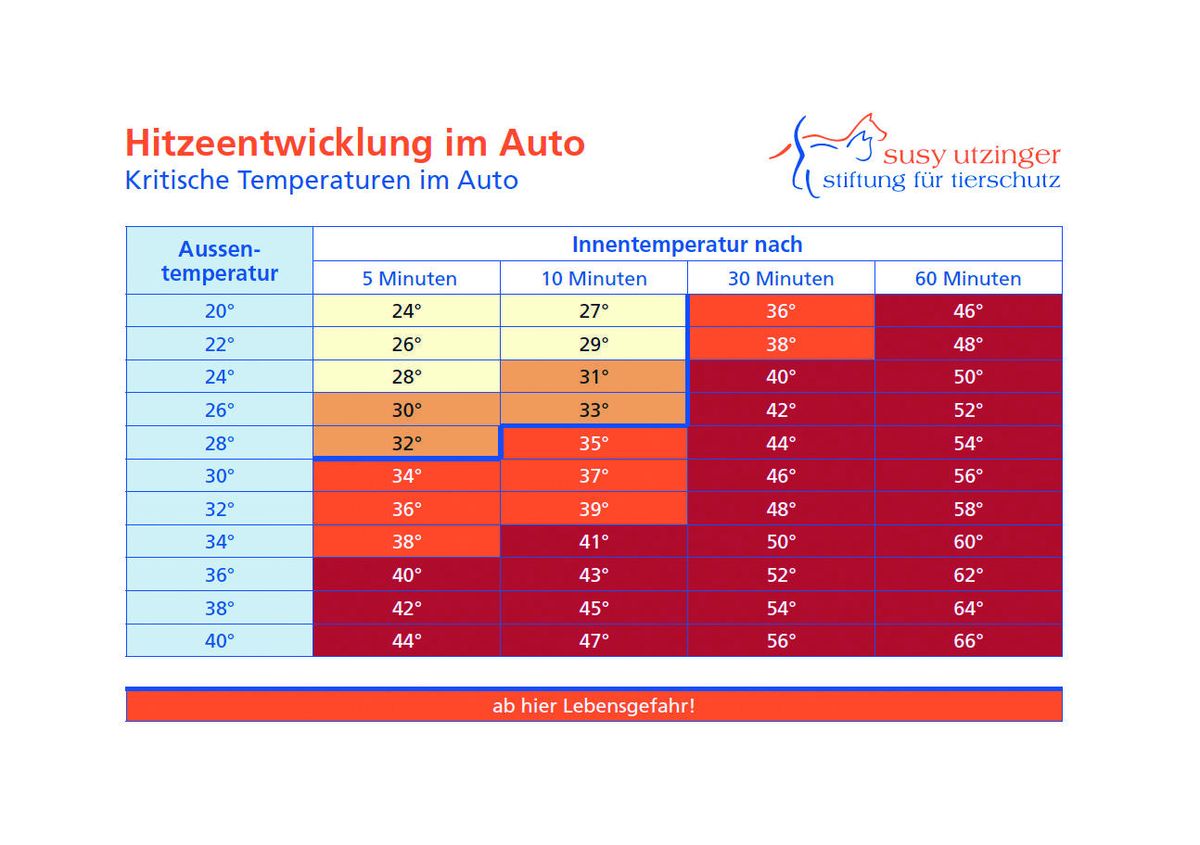
Source / copyright: Susy Utzinger Stiftung für Tierschutz
How do you recognise overheating in a dog?
While the human body cools down by sweating, dogs can only release excess body heat through rapid breathing over their large tongue. This is what causes panting. Warning signs that a dog is too hot are:
- Jumping around in the vehicle
- Heavier panting
- Howling or whining
- Unconsciousness
If you notice any of this in a dog in a car, you need to act immediately. The animal must be rescued from the heat trap.
What do you do if a dog is in an overheated car?
- Find the owner: First, try to find the dog's owner.
- Call the police: If the owner can't be found, alert the police. Leaving a dog in an overheated car is animal cruelty and therefore a punishable offence.
- Only as a last resort: Call the police on 117. Step in yourself only as a last resort, when the animal is in acute danger of dying and no help can arrive in time; this is legally risky.
- Find a shady spot: Lay the dog in the shade. Moisten its body, legs and mouth with cold water. Further treatment should be carried out by a vet.
What should you never forget?
- Even in warm temperatures, you shouldn't leave your dog in the car, not even for a short time.
- If you park the car in the shade, the shade moves and soon offers no protection.
- A bowl of water or an open window won't protect your dog from overheating either.
What helps against the heat in the car?
Even if you don't leave your four-legged friend in the car, the inside of the vehicle gets very hot in summer. There are things you can do about it:
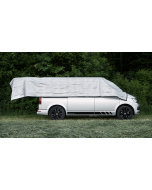
- The aluminium shade net is a popular companion on hot summer days. Thanks to its top-quality material, it can reflect up to 80 % of sunlight. You attach the shade net to the car with magnets or clamp eyelets.
- A rear ventilator provides extra fresh air in the vehicle.
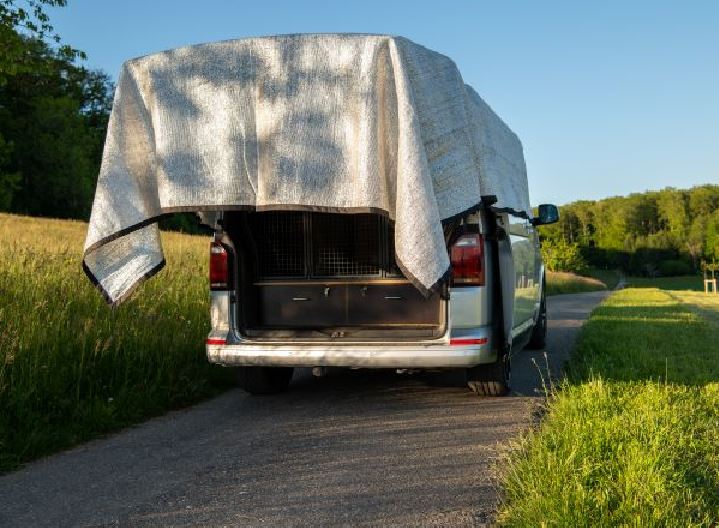
Heat is a danger. With these tips, you can still enjoy the summer with your dog to the full.