BARF is a raw feeding method modelled on the diet of the dog's ancestor: the wolf. In this guide you'll learn how the ration is put together and which types of meat, bones, offal, fish, fruit and vegetables can go in the bowl.
If you think our domestic dogs have nothing left in common with the wolf, you're mistaken. Despite domestication, our dogs' digestion has barely changed. That's why the wolf's menu is still the healthiest menu for dogs. This is exactly where the BARF diet comes in: in the wild, wolves eat their prey almost entirely and raw, and it gives them everything they need. Large amounts of grain, synthetic additives and other substances, as often found in commercial feeds, have no place on the menu. BARF stands for "Biologically Appropriate Raw Food". What exactly is BARF? Our guide What is BARF? explains it.

What does a BARF ration for dogs consist of?
The BARF ration is based on the prey animal on the wolf's menu. Around 20 % of a prey animal, such as a rabbit, consists of indigestible parts like fur and gut contents. With BARF, these are replaced by vegetables and fruit. The other 80 % of the ration consists of animal components:
- Pure muscle meat makes up the lion's share at around 50 % of the animal portion.
- 20 % of the animal portion is green tripe and omasum (parts of the stomach in ruminants). Dogs love them and they have good nutritional values.
- Offal (e.g. liver, kidney, spleen, lung, heart) makes up 15 % and is an important source of vitamins and minerals. Make sure that at least a third of the offal portion is liver.
- With BARF, 15 % raw meaty bones (RMB for short) are fed. This doesn't mean bare bones but, as with a hunted prey animal, only meaty bones with a meat content of about 50 %.
What does the ration look like with or without grain?
The composition described above applies to feeding without grain:
BARF without grain
- 20 % plant-based: 75 % vegetables, 25 % fruit
- 80 % animal-based: 50 % muscle meat, 20 % tripe, 15 % offal and 15 % raw meaty bones (RMB)
You can also include a small proportion of grain in the ration, provided your dog tolerates it. In that case the plant-based portion is increased and the animal portion reduced. The RMB portion also rises by 5 % at the expense of the tripe portion. The reason: the phytic acid contained in grain reduces the absorption of calcium from the RMB. So that your dog can still absorb enough calcium, the RMB portion needs to be raised slightly.
BARF with grain
- 30 % plant-based: 40 % vegetables, 40 % grain, 20 % fruit
- 70 % animal-based: 50 % muscle meat, 15 % tripe, 15 % offal and 20 % RMB
You don't have to feed all components in exactly this ratio every day. The ratio needs to be right over 1 to a maximum of 2 weeks so that your dog gets everything it needs. So 1 to 2 meals a week can consist of tripe alone. A completely vegetarian meal now and then is fine too, provided your dog likes it.
Which bones can I feed?
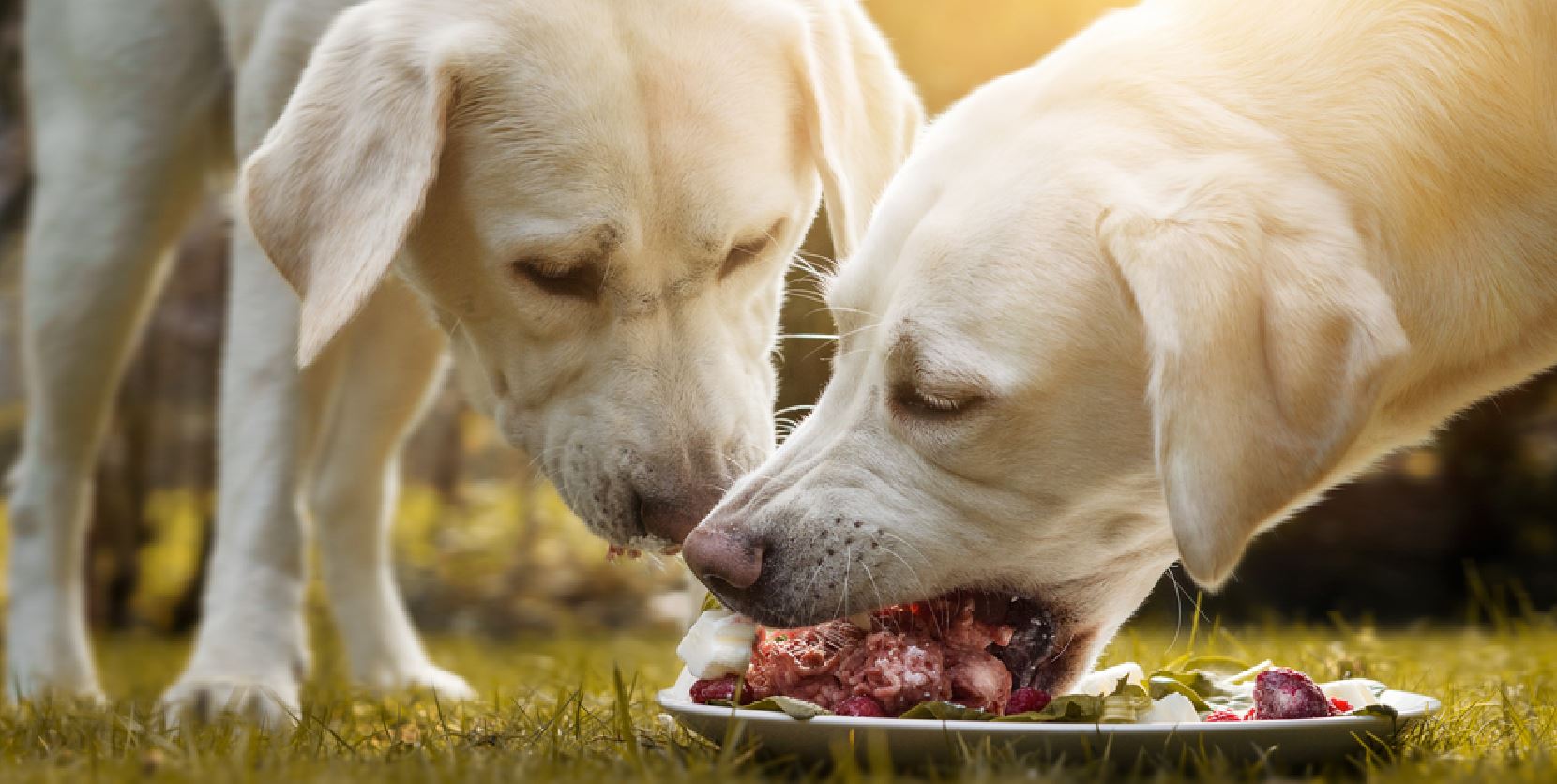
Raw meaty bones (RMB) are, among other things, an important source of phosphorus and calcium and should never be left out without a replacement. They should be meaty (about 50 % meat content), so don't feed bare bones. For experienced dogs, both hard and soft bones in one piece are suitable. During growth, we recommend feeding only soft bones.
Never feed cooked RMB or long bones, as they can splinter. Take care with marrow bones, as they can get stuck over the lower jaw while your dog eats.
Examples of soft bones: chicken backs, chicken carcasses, chicken necks, chicken wings, turkey necks, duck carcasses, duck necks, rabbit backs and more.
Examples of hard bones: lamb ribs, lamb breastbone, lamb neck bones, goat bones, horse neck bones, horse breastbone, beef breastbone, beef rib plate, veal ribs, veal breastbone, venison ribs, beef bones, roe deer necks and more.
Which offal belongs in the bowl?
Offal provides your dog with important vitamins and minerals and should never be left out without a replacement. With offal mixes, make sure that liver makes up at least a third of the mix, as it is a real vitamin bomb:
- Heart: rich in phosphate, the least contaminated of all offal
- Lung: hard to digest, should only be fed in small amounts
- Liver: important source of vitamins A and B, copper and iron
- Spleen: rich in blood cells
- Kidney: the high purine content can lead to deposits in the joints
- Green tripe (part of the beef stomach): very healthy, contains all nutrients, minerals and vitamins in a balanced ratio
- Omasum (part of the beef stomach): less fatty than green tripe, suitable for filling, low-calorie meals
Both parts of the beef stomach have a very strong smell and are best fed outdoors. If you'd rather not feed tripe or omasum, replace it in the meal 1:1 with the same amount of muscle meat.
Which types of meat are suitable for BARF?
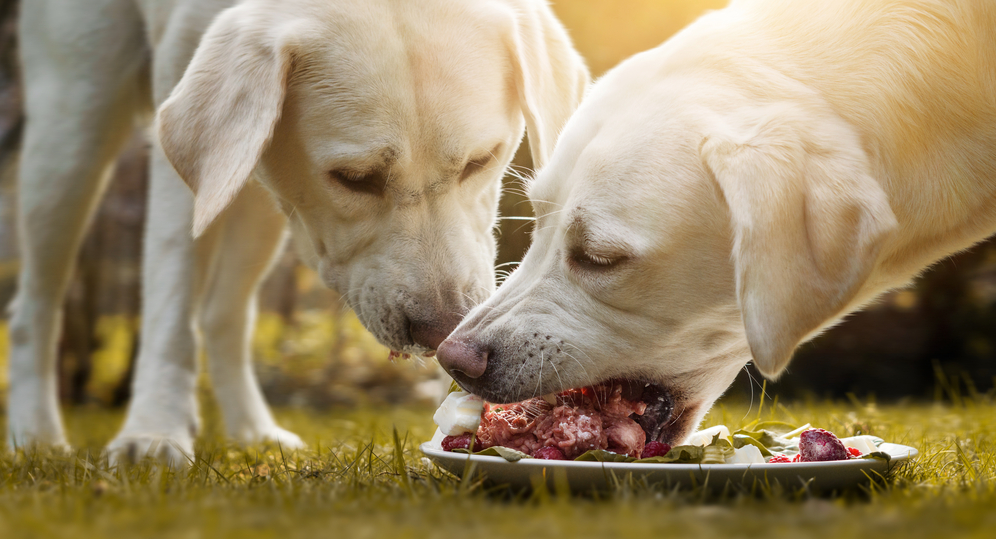
Muscle meat makes up a large part of the animal portion of the diet. With BARF, fat is the primary source of energy. The meat should therefore not be too lean, but should have an average fat content (over about 2 weeks) of 15 to 20 %. If that's not the case, you should add extra fat.
Meat can come from beef cattle, goats, sheep, horses, game, ostriches, turkeys, chickens, ducks, geese, rabbits and other animals. You should avoid raw pork, as it can be infected with the Aujeszky virus. This virus is fatal to dogs.
You don't have to feed all types of meat, but rotating between two or three kinds is advisable. Don't mix more than two types of muscle meat per ration. Feed the meat in pieces that are as large and chunky as possible, as dogs digest chunky meat better than minced or ground meat. Pay attention to hygiene and cleanliness when preparing it, to prevent bacteria.
Can my dog eat fish?
Fish is a suitable dog food and particularly rich in omega-3 fatty acids. Be careful with raw salmon: it is often infected with rickettsiae, which are dangerous to dogs. Freeze fresh salmon, trout and other members of the Salmoninae subfamily, or cook them, to kill rickettsiae and other parasites.
As an alternative to a weekly portion of fish, a good salmon oil combined with cod liver oil also supplies your four-legged friend with the nutrients it needs.
Why do fruit and vegetables belong in the bowl?
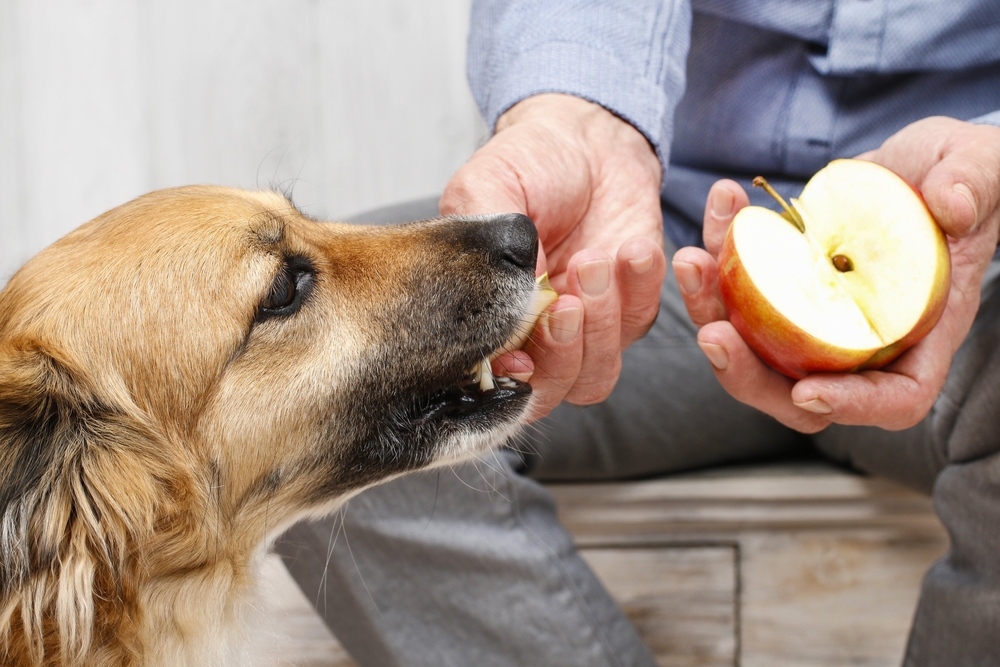
At around 20 % of the daily ration, vegetables and fruit are the second important foundation of raw BARF feeding. They replace the stomach and gut contents of the prey animal and provide fibre for gut health and to loosen the stools. They also supply secondary plant compounds, enzymes, vitamins and minerals.
Which vegetables and fruits are suitable?
The plant-based ration is made up of 75 % vegetables and 25 % fruit. At least 30 % of the vegetable mix should consist of green leafy vegetables such as lettuce, spinach or chard. For the rest, other vegetables are suitable; carrots, for example, work very well, as you can easily buy them all year round. Avoid anything from the cabbage family, as it causes bloating.
These vegetables and fruits are or are not allowed in the bowl (not guaranteed to be complete):
Suitable: apple, apricot, banana, strawberry, currant, cherry, blackberry, raspberry, rose hip, plum, chicory, Chinese cabbage, fennel, ginger, carrot, celery, kohlrabi, beetroot, lettuce, courgette, pumpkin, cucumber, chard, parsnip, Jerusalem artichoke and more.
Avoid the following: aubergines, avocados, acorns, raw garden beans, cloves, raw elderberries, raw pulses, cocoa, chocolate, raw potatoes, macadamia nuts, bitter almonds, nutmeg, fruit stones, green and yellow peppers, quinces, tomatoes, grapes, raisins, xylitol (sweetener), cabbage.
Why are vegetables and fruit puréed?
Dogs often won't eat vegetable pieces that are too large. In addition, certain secondary plant compounds can be absorbed better once the plant cell walls have been broken down. An ordinary hand blender is perfectly suitable for puréeing.
Which supplements does your dog need on BARF?
The belief that BARF requires countless supplements to keep a healthy dog healthy is stubbornly persistent. But it's wrong. If you stick to the ratio described, only the following supplements are needed in the diet of a healthy adult dog:
- Fish oil with vitamin E: omega-3 and omega-6 fatty acids are essential fatty acids, as dogs can't produce enough of them themselves. Meat from intensive farming provides an excess of omega-6 fatty acids, so an oil with a high omega-3 content is needed in addition. Fish oils have the highest proportion of omega-3 fatty acids; a wild salmon oil, for example, is a good choice. Before feeding, vitamin E must be added to the oil to stabilise it and to help your dog absorb the omega-3.
- Seaweed meal: with BARF, the iodine-rich thyroid gland of the prey animal is not fed, as the hormones it contains could affect your dog's thyroid. Marine algae such as bladderwrack or Ascophyllum nodosum are used as a substitute. They are particularly rich in iodine and minerals.
- Cod liver oil: cod liver oil is obtained from the liver of fish (e.g. cod) and primarily serves to supply vitamin D.
You can read more in our guide BARF supplements.
Want to start BARFing yourself?
Would you like to BARF your dog but don't feel confident going it alone? Then certified nutrition advisers specialising in BARF according to Swanie Simon will gladly create a personal and easy-to-follow BARF plan for you. The team will answer your questions via the contact page. The BARF book by Nadine Wolf also gives you good insights.
Learn more about BARF: