The raw feeding method BARF for cats is modelled on the diet of wild cats in the great outdoors. Despite domestication, the digestion of our house cats has barely changed. Here you'll find out what belongs in the bowl, which supplements are needed and what you should look out for.
Why is the cat a true carnivore?
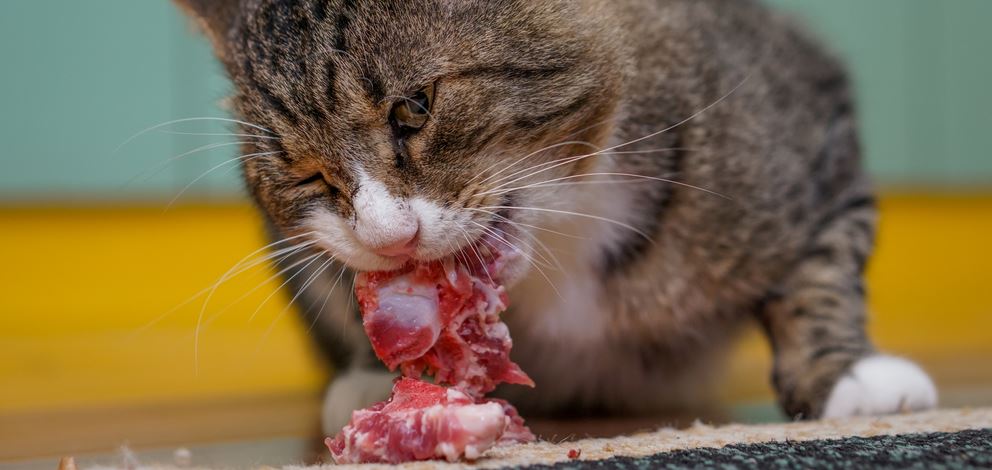
The menu of wild cats is still the healthiest one for our cats. This is exactly where the BARF diet comes in. In the wild, wild cats, much like outdoor cats, feed on prey animals such as mice, birds or rabbits. These are eaten almost whole and raw, and give cats everything they need. Small prey animals contain the ideal composition of proteins, minerals and all the other nutrients required.

Large amounts of grain, synthetic additives and other substances commonly found in commercial pet foods don't belong on the menu. Cats find it very hard, or even impossible, to make use of carbohydrate-heavy foods such as grain or potatoes. Many cat foods contain a high proportion of carbohydrates, even though a cat's physiology isn't designed to digest large amounts of them. Cats above all need animal proteins from meat and fibre, which in the wild they take in through the fur of their prey.
Even big cats in wildlife parks and zoos are fed raw meat rather than processed food. Studies also suggest that cats digest raw food much faster and more completely than processed food. When you feed your cat raw, you know exactly what goes into the bowl and how much meat is really in it. You don't have to worry about chemicals, flavour enhancers or vague labelling.
Why do many cats drink too little?
Cats are used to meeting their fluid needs through their food and are rarely willing to drink large amounts of water. If your cat takes in too little fluid over a long period, it can lead to kidney disease. With a balanced and varied raw diet you can help counteract kidney problems. Tartar problems can also be reduced.
What does a BARF ration for cats consist of?
The BARF ration is based on the prey animal. The indigestible parts such as fur and gut contents are replaced by 5% vegetables and fruit, in a ratio of 85% vegetables to 15% fruit. At 20%, the plant share is much lower than for dogs because cats are strict carnivores (obligate carnivores). The remaining 95% of the ration is made up of animal components:
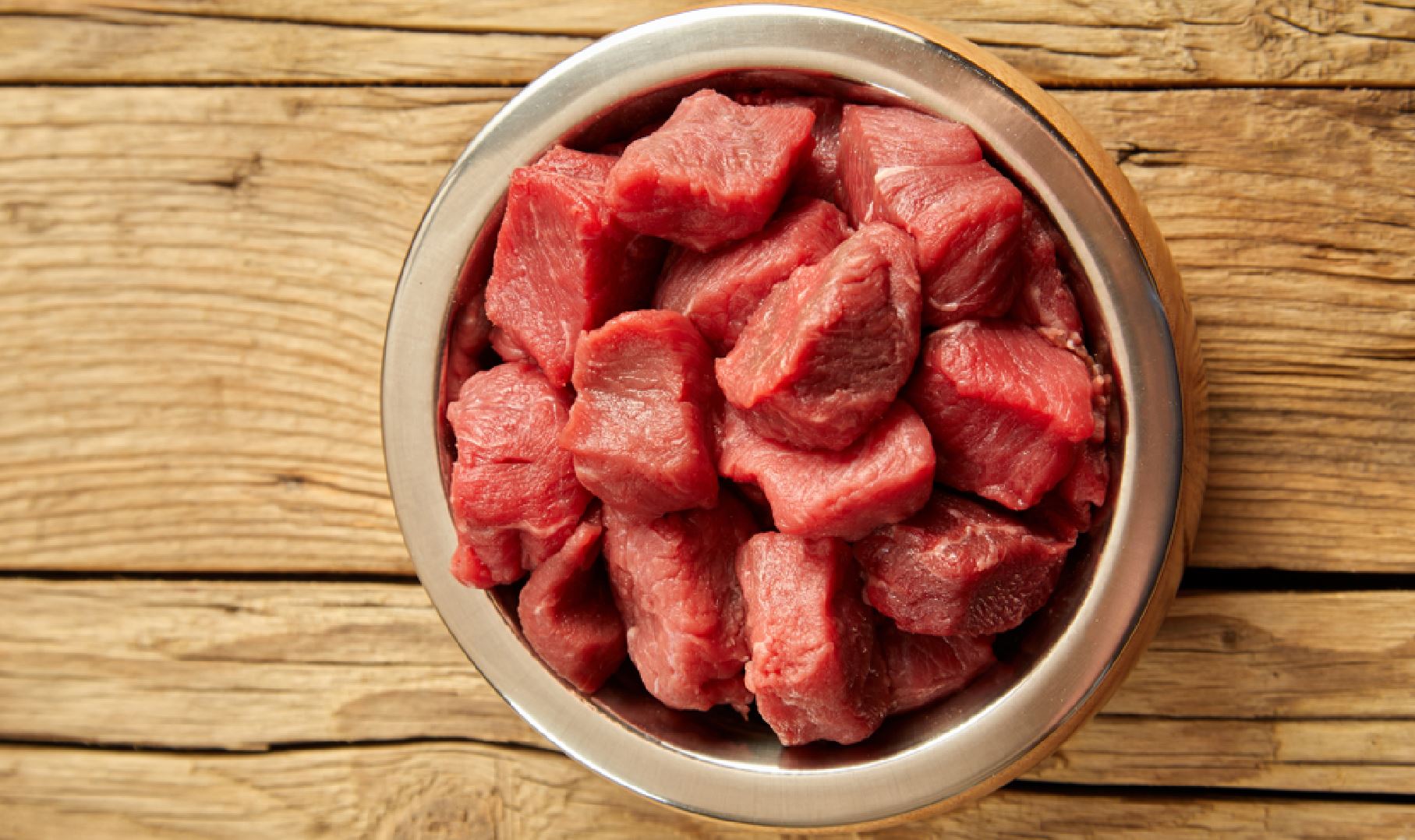
- Pure muscle meat makes up the lion's share at around 70% of the animal portion. Cats have a higher taurine requirement than dogs. Part of the muscle meat should therefore regularly consist of heart (from chicken, beef, etc.). Heart is a good source of taurine.
- Offal (e.g. liver, kidney, spleen, lung) makes up 20% and is an important source of vitamins and minerals.
- BARF also covers the bone content of the prey animal: 10% raw meaty bones (RMB for short) are fed. As the name suggests, this doesn't mean bare bones, but, as with a caught prey animal, only meaty bones with a meat content of approx. 50%.
Where does the heart belong?
Heart is actually pure muscle meat and, depending on the approach, is classed as either muscle meat or offal. In BARF for dogs it counts as offal, as it only needs to be fed in small amounts. For cats it belongs to the muscle meat share, because cats have a much higher taurine requirement. A cat's body uses more taurine and at the same time produces it less efficiently than a dog's.
What does the ideal ration for cats look like?
The BARF ration for cats is made up as follows:
- 5% plant-based: 85% vegetables, 15% fruit
- 95% animal-based: 70% muscle meat (including heart), 20% offal and 10% raw meaty bones (RMB)
You don't have to feed all the components in exactly this ratio every day. The ratio needs to be right over 1 to a maximum of 2 weeks so that your cat gets everything it needs. With cats, many people choose to mix the BARF food for the whole week, portion it into daily rations and freeze it. Otherwise you'd have to weigh out and mix extremely small amounts every day.
Raw feeding also works without whole prey animals. You can put together your cat's "prey animal" yourself and buy the individual meat components in pieces or minced. The fibre that would otherwise be taken in through the prey animal's fur is replaced by psyllium husks.
Which supplements does a cat need on BARF?
The belief that BARF requires countless supplements to keep a healthy cat healthy is stubbornly persistent. But it's wrong. If the ratio described above is right, only the following supplements are needed in the diet of a healthy adult cat:
- Fish oil with vitamin E: Omega-3 and omega-6 fatty acids are essential fatty acids, as the cat cannot produce enough of them itself. Meat from intensive farming supplies an excess of omega-6 fatty acids, so an oil with a high omega-3 content is needed in addition. Fish oils have the highest proportion of omega-3 fatty acids; a wild salmon oil, for example, is well suited. Before feeding, the oil must always have vitamin E added to stabilise it and to help the cat absorb the omega-3.
- Seaweed: With BARF, the iodine-rich thyroid gland of the prey animal is not fed, as the hormones it contains could affect the cat's thyroid. Seaweed is used as a replacement, e.g. bladderwrack or Ascophyllum nodosum. They are particularly rich in iodine and minerals.
- Taurine: Cats have a higher taurine requirement than dogs and a limited ability to synthesise taurine, so taurine should be supplemented. For outdoor cats that hunt and eat mice, or if you regularly feed fresh rather than frozen meat, taurine supplementation isn't strictly necessary.
- Cod liver oil: Cod liver oil is obtained from the liver of fish (e.g. cod) and is mainly used to provide vitamin D.
What are the benefits of BARF for cats?
Many owners report that raw feeding has a positive effect on their cat's health:
- Tartar occurs less often. This may be because raw feeding leaves no starchy or sugary food residues on the teeth.
- Obesity is less common, and the cat is more balanced and has a lean, muscular build.
- Typical modern-day diseases that are becoming ever more common (allergies, digestive problems, urinary tract disease, liver and kidney disorders or diabetes) could be avoided or alleviated by raw feeding.
- For worm prevention and protection against parasites such as ticks, there are many natural alternatives that fit ideally into the diet.
The argument that BARF is more expensive often only holds at first glance. If you compare the meat content and quality of the ingredients with a high-quality dry food, the difference shrinks. Shopping also normally takes no extra time: instead of dry food, you buy fresh meat from a specialist retailer or order it online.
Are BARF mixes suitable for cats?
BARF mixes are formulated for dogs. For cats they are therefore not ideal in the long term and are only intended as a stopgap. It makes more sense to put a meal together from the individual components. Tripe, for example, isn't part of a cat's natural diet.
Want to feed your cat BARF?
We are responsible for what our cats eat, because they can't decide for themselves. If you'd like to feed your cat BARF, certified nutrition advisers specialising in BARF according to Swanie Simon will be happy to create a personal and easy-to-follow BARF plan for you. The BARF book by Nadine Wolf also gives you good insights. You'll find the basics of BARF in our guide What is BARF?.