
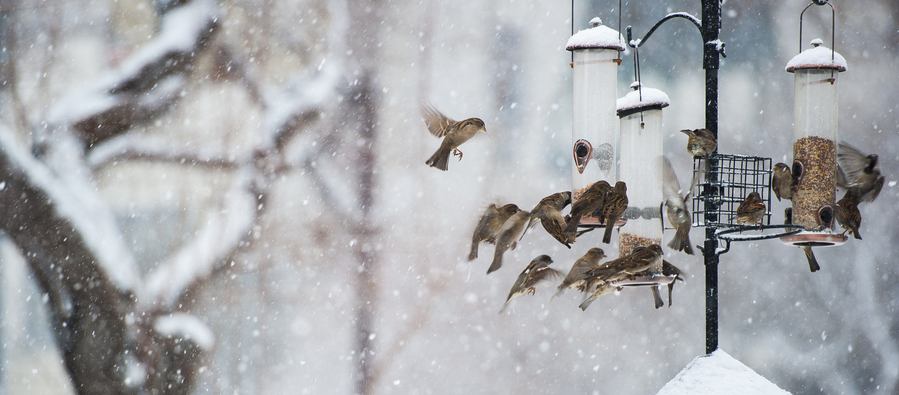
When should you start feeding wild birds, and with what? Every autumn, garden owners ask themselves the same questions. The short answer: prepare the feeding station in autumn, start with small amounts and feed regularly from the first frosty nights. Here you can read which food suits tits, blackbirds and sparrows, where the feeding house belongs and how to avoid disease at the feeding station.
When should you start feeding wild birds?
The classic feeding season runs from November to the end of February. During this time birds find the least natural food, and the cold increases their energy needs: on a frosty night a tit loses up to ten per cent of its body weight and has to eat it back during the day.
Autumn is the time to set up the feeding station. Birds remember where food is available and seek those places out when it turns cold. If you start with small amounts in October, you will have a well-visited feeding station by December. Whether you feed all year round is a matter of opinion: year-round feeding does not harm birds as long as hygiene and food choice are right, and in built-up areas with little natural structure it benefits many species. In spring and summer you should avoid fat-based food and make sure young birds are not given large kernels that they cannot digest.
Does year-round feeding make sense?
Year-round feeding has long been debated, and even bird experts do not agree. In the past, feeding was only recommended in winter and only when the ground was covered in snow. Thanks to research findings and the increasing loss of habitat for birds, there are now more and more arguments in favour of feeding all year round.
Why birds need our help
Bird numbers in Europe have fallen sharply over recent decades. Even familiar species such as sparrows, larks and starlings are affected. There are many reasons: modern farming uses herbicides and insecticides, meadows are mown before seeds have formed, and wild herbs and flowers are suppressed. As a result there are fewer insects and beetles. Hedges and fruit trees with berries and fruit are disappearing more and more.
A look at our gardens shows a similar trend. Stones and conifers have become fashionable because they need little work. The necessary diversity, which is important and even vital for birds, is missing.
Nesting opportunities are limited too. Hedges, trees and quiet, sheltered spots hidden from cats are becoming scarcer. This makes it harder to raise nestlings, which are constantly hungry and need to be fed. If the parents find little food near the nest, they have to search over an ever wider area. This can cause shortages that put the rearing of the young birds at risk.
Which food is suitable all year round?
Sunflower seeds, for example striped sunflower seeds, make a good basic food that almost all bird species will eat if in doubt. Free-range bird food A, B and D also contain other seeds of different sizes, which different species prefer. Tits in particular love mixtures of fat and seeds, available as tit fat balls. Please note: in spring and summer, skip the fat-based food.
Choose a feeder in which the birds cannot walk around in the food and soil it with droppings. This minimises pathogens and keeps the bird food fresh for longer. The book by Peter Berthold, "Feeding Birds the Right Way", offers more useful tips.
Which food for which birds?
Two groups meet at the feeding house: seed eaters and soft-food eaters. If you cater for both, you will see the greatest variety of species.
Seed eaters: tits, finches, sparrows, nuthatches
- Sunflower seeds are the basic food and are eaten by almost all species. Shelled seeds create less waste and fewer seedlings under the feeding house. A classic choice is the sunflower seeds in the 2 kg bag.
- Broken peanuts provide plenty of fat and protein and are popular with tits and nuthatches, for example as Go Wild broken peanut kernels. Only offer whole peanuts in feeding columns so that they are not swallowed whole.
- Scatter food mixes with hemp, millet and oat flakes also appeal to finches and buntings.
- Fat food and fat balls are ideal in frosty weather. Buy fat balls without plastic netting or hang them in a fat ball holder, as birds can get their feet caught in nets.
Soft-food eaters: blackbirds, robins, wrens, dunnocks
These species do not eat hard kernels. They like oat flakes, raisins, chopped apples and berries. Blackbirds look for food on the ground, so a ground feeding spot or a flat tray helps them more than a hanging feeding house. Halved apples spiked on a branch are a reliable blackbird magnet in winter.
What does not belong in the feeding house
- Bread swells in the stomach and provides hardly any nutrients.
- Salted or seasoned leftovers, bacon, sausage, cheese.
- Spoiled or mouldy food. Store bird food in a dry, cool place and do not buy more than you will use in one season.
How do you feed blackbirds in winter?
The blackbird is one of the most widespread bird species in Europe and the most commonly seen in Switzerland. But even blackbirds find it hard to find enough food in winter. Besides pesticides and the destruction of natural food sources such as meadows, hedges and fruit trees, cold winters mean that not only the number of birds but also their diversity declines. With a suitable feeding station and the right food, you can help the blackbirds in your area to get through the winter better.
What do blackbirds eat?
Blackbirds are pure soft-food eaters and prefer animal-based food. You can see them searching for food with their beaks in brushwood, leaves and on lawns. They eat snails, insects and earthworms as well as fruit of all kinds. Offer them bran, oat flakes, raisins, poppy seeds and fruit. In winter, oat flakes soaked in fat are also suitable, so that the birds can take on plenty of energy and withstand the cold. Put out red apples and leave the berries hanging on the shrubs.
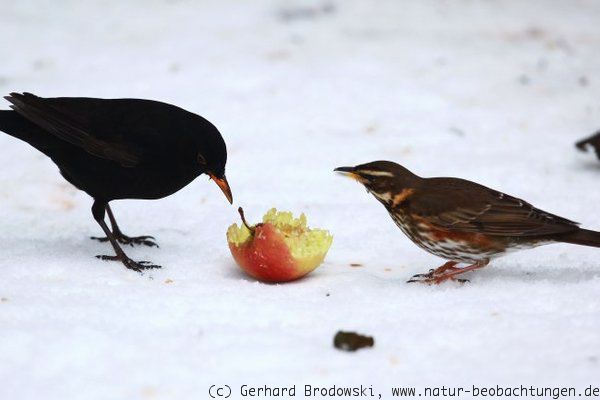
Which feeding spots do blackbirds need?
Because blackbirds look for food on the ground, houses hanging freely in the air are of no use to them. Feeders or bird houses that stand on the ground or on a firm surface, such as a board, are better suited. Choose a model in which the birds cannot walk around in the food and soil it with droppings. This minimises the transmission of pathogens, and the food does not spoil as quickly.
Sources: nzz.ch, Naturschutzecke Oberbipp
Feeding house or feeding column?
The biggest mistake at feeding stations is hygiene. In open feeding houses, birds walk around in the food and soil it with droppings. This spreads salmonella and trichomonads, which kill many greenfinches in winter.
Feeding columns, in which the food slides down from a silo, prevent this. The birds sit on the outside and peck through openings. They are the most hygienic solution and need the least care.
Feeding houses are nicer to look at and also provide room for larger birds. Choose models with a roof and silo, such as the Breithorn bird feeding house with stand or the smaller Chasseral for hanging. Each day, only top up as much as is eaten in a day, and clean the house once a week with hot water. You can find an overview at feeding houses for the garden.
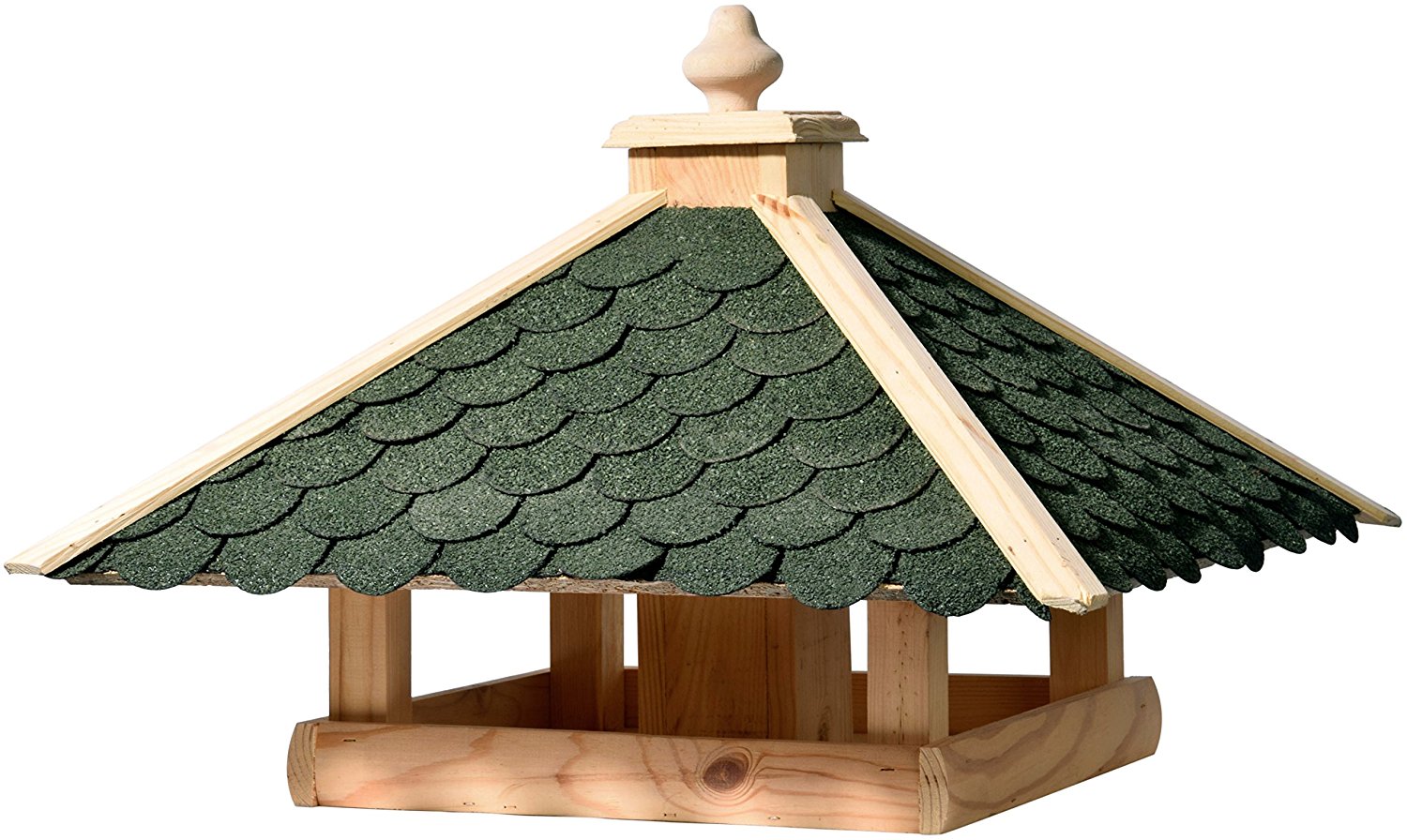
Where should the feeding house go?
- Open view and cat-safe: At least 1.5 metres above the ground and not right next to dense bushes from which cats can creep up. A stand in an open area is ideal.
- Cover nearby: Shrubs or trees should be two to five metres away, so the birds can flee into them if a sparrowhawk appears.
- Away from windows: Large panes of glass in the flight path are death traps. Either keep more than five metres away or mark the window with stripes or patterns. Single bird-of-prey silhouettes do not help.
- Weather-protected: The entrance should face away from the prevailing weather so that food and birds stay dry.
Don't forget water
In frosty weather, water is often scarcer than food. A shallow dish of fresh water, changed daily, will be used for drinking and bathing. Place it in an open, visible spot too. Do not add salt or antifreeze to the water; instead, top it up with a jug of warm water in the morning.
What should you do if sick birds appear?
If you see fluffed-up, listless birds at the feeding station or find dead animals, stop feeding for two weeks, clean everything thoroughly and then move the feeding house to a different spot. This breaks the chain of infection.
Frequently asked questions
When should I start feeding birds?
Set up the feeding station in October and start with small amounts. From the first frosty nights in November, feed regularly until the end of February. Year-round feeding is possible if hygiene and food choice are right.
Which bird food is the best?
Sunflower seeds as a base, plus broken peanuts and fat food for tits, and oat flakes, raisins and apple pieces for blackbirds and robins.
Can birds eat bread?
No. Bread swells up, provides hardly any nutrients and spoils quickly. Salted leftovers do not belong in the feeding house either.
How often do I need to clean the feeding house?
Open feeding houses once a week with hot water, feeding columns once a month. Each day, only top up as much food as is eaten.
Why are no birds coming to my feeding house?
It usually takes one to three weeks for the birds to discover the spot. Check whether a cat is lurking nearby, whether there is enough cover and whether the food is still fresh.
In short
- Prepare the feeding station in October, feed regularly from the first frost until the end of February. Year-round feeding is possible with good hygiene and suitable food.
- Sunflower seeds and broken peanuts for seed eaters, oat flakes and fruit for blackbirds and robins. No bread, nothing salted.
- Feeding columns or houses with a silo, small amounts daily, clean weekly.
- Open view, cat-safe, with cover nearby and away from large windows.
- Fresh water, even in frosty weather.
You will find everything for feeding birds under wild bird food and in the wildlife section. Also read: Hedgehogs in the garden: when feeding really helps.



