A dog is a big responsibility and needs careful thought. Before your puppy moves in, it's best to ask yourself a few important questions. And once he's home, the socialisation period begins and lasts until about the 14th week of life, probably the most important time in his development. Here you'll find the checklist for prospective dog owners and the most important tips for the first few weeks.
Are you ready for a dog? Ten questions before you get one
Question 1: Why do you want a dog?
When children ask for a pet in particular, parents often need to ask themselves whether they only want an animal because classmates have one too, or whether there is a genuine wish behind it to take responsibility for another living creature. Parents also need to keep in mind that they carry the main responsibility for looking after the animal.
As an adult too, you need to be aware that you are sharing your life with a pet, caring for it throughout its whole life and providing it with the best possible living conditions. A dog is not a fashion trend or a home alarm system, but a permanent member of the family.
Question 2: What do you expect from your dog?
A common reason for animals being handed over to animal shelters is that their owners are disappointed because the animal doesn't "deliver" what they had hoped for. The cause is usually unrealistic expectations. If you look closely at the characteristics of the species you want before adopting, you can compare your own ideas with reality much better.
The individual differences between animals of the same species, even within the same breed, should also not be underestimated. That's why several visits to the animal shelter or the breeder are necessary until human and animal have found each other.
You can find more information about the different dog breeds here.
Question 3: Do you have enough time for your dog?
It makes no sense and is not animal-friendly to get a dog if you work full time and your dog has to stay at home alone all day. Only having time for your dog in the evenings and at weekends is by no means appropriate for a highly social animal like a dog.
Question 4: Do you have enough space to keep a dog?
Ask yourself whether your dog will have enough space at your home. Can you offer him places to retreat to within your own four walls? It's also important that you can go outside with your dog several times a day, not just for walks, but also to play with him and explore. Just like us humans, your dog doesn't want to walk the same route all the time.
Question 5: Are your family and the landlord or property management on board?
Keeping a pet is always a family project, so everyone involved has to be on board. It's worth finding out beforehand whether anyone in the family or household is allergic to dogs or dog hair, for example by looking after a dog for a while. Dogs from animal shelters can also sometimes be taken home for a trial weekend.
To avoid hardship cases later on, you should always inform your landlord, property management, house owner, housing cooperative or neighbouring condominium owners before getting a pet and ask for their consent in writing. Better safe than sorry.
Question 6: Can you afford a dog?
Keeping a pet isn't cheap. The main costs when getting a new dog are the initial veterinary care (for example neutering, vaccinations, microchipping), the essential equipment for your home and various courses (dog owner competence courses (Sachkundenachweis), puppy imprinting classes, young dog classes, training courses). You also shouldn't forget the cost of looking after your dog when you go on holiday.
Depending on size, you should budget CHF 1000 to 2000 a year in running costs for a dog (food, regular vet costs, courses, dog tax). For unforeseen vet bills (illness, accident), you should either set aside an emergency fund or take out pet insurance.
Question 7: Can you give your dog enough social contact?
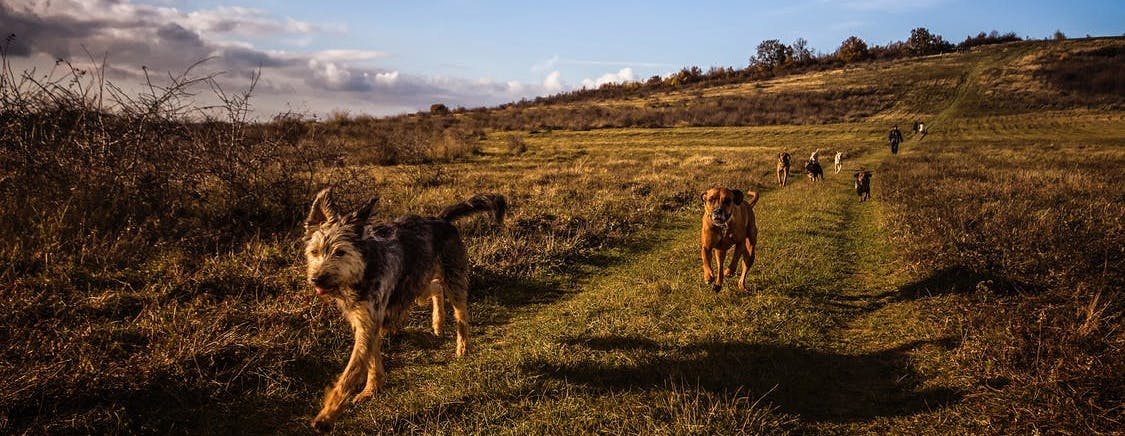
On their daily walks, dogs need enough contact with other dogs and people.
Question 8: Do you have a good place for your dog during holidays?
Friends, neighbours, relatives, professional pet sitters or dog boarding kennels can be the solution if you can't take your dog on holiday with you. But try it out beforehand, because not all dogs cope equally well with a stay like this.
Question 9: How will you manage breeding?
Pets should not and must not breed uncontrollably. For dogs, you should discuss the options for birth control with your vet.
Question 10: Where should your dog come from?
In animal shelters, many healthy, happy dogs are waiting for a home. If you take the time, an animal from a shelter has many advantages: you can try out whether dog and human suit each other, and take the dog for a trial walk or have him come home with you. Most animals are also neutered, vaccinated, checked by a vet and microchipped. Holiday care is possible at the shelter, and returning the dog is also possible.
Reputable Swiss breeders also offer dogs. Look out for quality seals and find out what requirements they set. Several visits make particular sense with breeders. If you can't visit the breeder and the breeding facility in person several times, it's better to leave it. Good breeders remain available for advice throughout the entire lives of the animals they have bred.
You should definitely avoid buying animals via free classified ad platforms on the internet. The risk of being swindled by fraudsters or falling into the hands of unscrupulous animal traders is too great. Dogs imported in large numbers from southern countries are also problematic from an animal welfare point of view.
The best way to use the internet is only to get in touch with animal shelters and breeders in Switzerland and to find out about pet shops and breed associations.
How do you get the first few weeks with your puppy right?
Until about the 14th week of life, your puppy is in the so-called socialisation period. Now it's important that you lovingly and consistently show your young dog his boundaries as he moves in with you and gets through everyday life together with you.
Training and education are on the agenda
In the wild, the puppy would now be brought up by the male dog. We humans have to take on this task, even if it isn't always easy, because the puppy is just so incredibly cute. During the socialisation period, contact with other puppies and dogs, new sounds, new and different floor surfaces and of course unfamiliar people are extremely important. This is when the foundation for your dog's future behaviour is formed. Any mistakes made during this time, as well as any insecurities and fears he experiences, can affect your dog for the rest of his life.
How does your puppy take in impressions?
During the socialisation period, puppies should learn as much as possible. But you need to be careful not to overwhelm your puppy. Otherwise the dog won't be able to settle because of sensory overload. Make use of your puppy's active phases and always proceed in small steps. The puppy doesn't need to and shouldn't learn everything in one day.
There's plenty to learn: other dogs and puppies, unfamiliar people, unknown pets, cars, car journeys, the vet's practice, children, the hum of the vacuum cleaner, radios, televisions, lifts and much more should now be on the training plan. The aim of all this is a confident approach to different situations as well as the ability to bond. Both are important prerequisites for a harmonious life together for human and dog.
How do you practise being alone with your puppy?
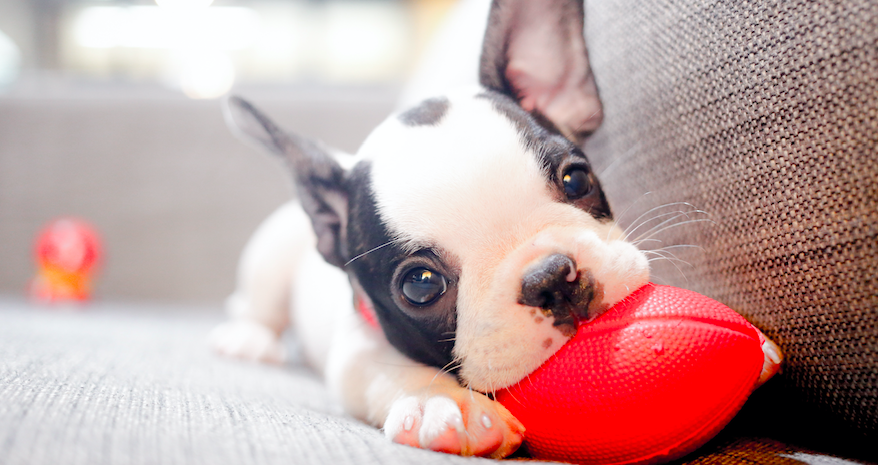
There's not just a lot of new things on the programme for your puppy. He also has to learn to be alone. Even if you think this isn't necessary because someone is always at home anyway, it should still be practised. Because if an emergency ever happens and nobody can stay at home with the dog, your four-legged friend will be able to cope.
You practise being alone in small steps over a longer period of time:
- First, start with separation within the home: for example, you're in the kitchen while the puppy has to stay in the living room.
- In the next step, you go to the cellar or the laundry room, for example, and the puppy has to stay in the flat or on the upper floor.
- Then you leave the house or flat for 5 minutes and gradually increase the time. Important: when you come back, you should ignore your dog, as hard as that is, even if he is overjoyed. Only once he has calmed down can you stroke and praise him.
It helps for these training sessions if you've played with your dog or been for a walk beforehand. That way the puppy is already tired and finds it easier to accept the situation.
How does your puppy find calm in everyday life?
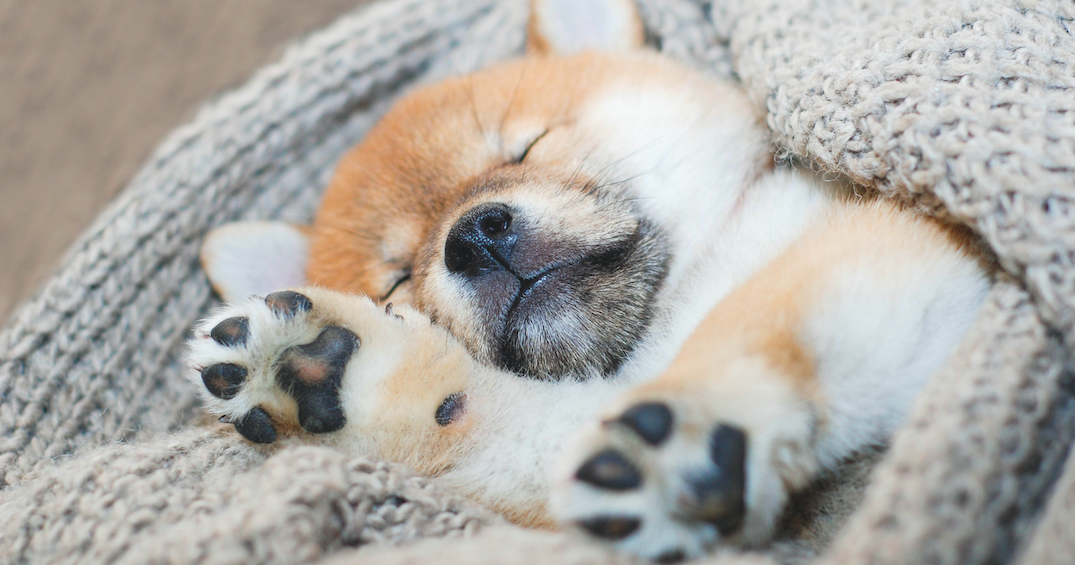
Some puppies are naturally calm from the start. They lie down, watch or sleep, and if you simply let them be, you've already mastered the topic of calm. With the others, you should work on it consistently from the very beginning. After all, who wants a hyperactive four-legged friend at home?
Especially in families with children, we recommend setting up a quiet zone for the dog. This can be a bed, a blanket, a den or any other quiet, comfortable spot. When the dog retreats there, it means to the children that the dog is off limits and must not be disturbed.
Calm and rest should also work in the hustle and bustle of everyday life, on the street, in a restaurant or at work. For example, on a walk, go to a bench or sit on some steps and let your puppy watch the world go by. He might even lie down and fall asleep. That would be great, because it helps consolidate what he's experienced, and the dog learns that there doesn't always have to be action when things are hectic around him.
How do you train your puppy out of chasing?
People often ask: "But he definitely won't hunt, will he?" Hunting is part of the dog's primal instinct, as dogs descend from wolves, and you're well advised to discourage it from an early age. It starts with the puppy "hunting" a fly at home or leaping after a leaf in the wind on a walk. It looks very cute, but it's already the beginning of hunting behaviour. All these little precursors can be made unimportant with distractions such as play, so the hunting drive isn't unnecessarily encouraged.
You'll get many more tips at puppy class, which many dog schools offer until the puppy is 14 or 15 weeks old. After that, you move up to the young dog group and real life begins.