Whether it's a beach holiday, a break in the mountains or a trip in a van, many dog owners don't want to go on holiday without their four-legged friend. To make the trip relaxed for both of you, it's worth taking a close look at accommodation, destination, entry requirements and preparation.
How do you find the right accommodation?
How stress-free your holiday will be is often decided at the booking stage. Not every place that calls itself pet-friendly is automatically ideal for your dog. So look closely and check the details. Pay particular attention to the following points:
- Are dogs really allowed, or only on request?
- Are there extra costs or restrictions?
- What rules apply on site?
- Are there areas nearby where you can walk your dog without any problems?
A quick check in advance saves you arguments or unpleasant surprises later on.
Which destination suits you and your dog?
The destination also has a big influence on your holiday. In summer it can quickly get too hot for dogs, especially in cities or very busy regions. Places with plenty of nature, shade and access to water are much more relaxed. Mountain regions and areas with lakes are especially popular, as your dog can move around and cool down more easily there. At the same time, you benefit from more peace and quiet and fewer crowds.
Which documents and entry requirements do you need to know about?
Besides planning the trip itself, don't forget the formalities. For travel abroad you need a few important documents, which you should organise in good time. Looking into the entry requirements early gives you peace of mind.
Travelling to the EU
The following basic rules apply for travel within the EU (for example to France, Germany, Italy, Austria or Spain). Switzerland is a Schengen state, which makes crossing the border easier, but special requirements still apply to your dog.
- Rabies vaccination: Your dog must have a valid rabies vaccination. The vaccination record should be clearly visible and up to date.
- Pet passport: Your dog needs an EU pet passport that documents all vaccinations, including the rabies vaccination.
- Microchip: Your dog must be identified with a microchip so that the passport can be clearly matched to them.
- Waiting period: After the first rabies vaccination, you must observe a waiting period of 21 days.
Travelling outside the EU
Some countries outside the EU, such as the UK, Ireland, Norway, Finland or Malta, have stricter requirements:
- Parasite treatment: Some countries require treatment against echinococcosis (tapeworm), which must be given no more than 5 days before entry.
- Rabies vaccination and microchip: These countries require a rabies vaccination and a microchip as in the EU, but the requirements are even stricter.
Muzzle requirements and restricted breeds
In some countries or areas, dogs must wear a muzzle in public. If necessary, organise a muzzle early and practise wearing it at home with your dog. Also check whether your dog needs certain vaccinations or whether further conditions apply depending on the breed.
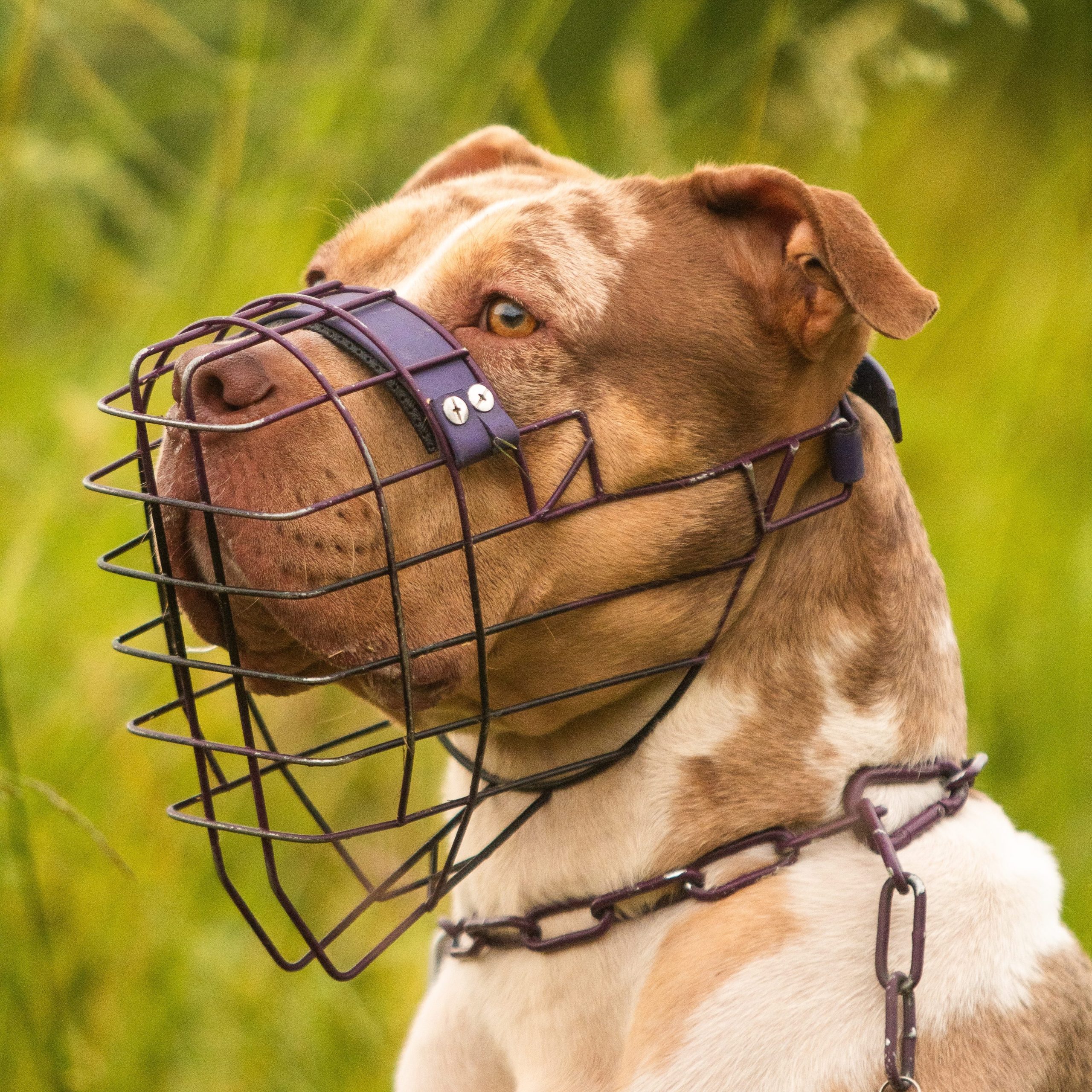
If you travel abroad with a dog from a restricted breed list, be sure to check the entry requirements of your destination country. Many countries have special rules for restricted breeds, such as muzzle requirements or bans on certain breeds. In some countries, restricted breeds aren't allowed to enter at all. So get in touch with the embassy or consulate in good time to avoid problems.
How do you protect your dog from parasites and rabies?
In southern countries, sandflies, which can transmit leishmaniasis, are very active, especially at dusk. There are special insect repellents for dogs that reduce the risk. You should also protect your dog from ticks on holiday. To avoid rabies, your dog shouldn't come into contact with bats or stray cats and dogs, and shouldn't drink from public bowls. It's best to get advice from your vet before the holiday, so that your dog doesn't fall ill while away and suffer long-term damage.
How do you make the journey relaxed?
By car
The journey is often underestimated, but it's crucial for a good start. Especially in summer, it's advisable to drive in the early morning, in the evening or at night so the car doesn't get too hot. Plan regular breaks so your dog can stretch their legs, and make sure they always have access to fresh water and enough air.
Very important: never leave your dog in a parked car. Even at mild temperatures, it can quickly become dangerously hot inside. If you do have to park the car with your dog in it, make sure there is enough water, park in the shade, leave the windows slightly open and go back to the car regularly to check. In some countries, dogs being stolen from cars is unfortunately not uncommon, so it's a good idea to also lock the dog crate in the boot. If there's no shady spot or the sun moves quickly, the aluminium shade net for cars provides mobile shade. It reflects up to 80 % of the sun's rays and so protects your car from extreme heat. You'll find more tips on cooling your dog down here.
By plane
If your dog isn't ‘handbag-sized’ and therefore isn't allowed to fly in the passenger cabin, we recommend travelling without them if possible. A flight in the cargo hold without their owner is very stressful, even if your dog is used to pet carriers. It also gets very cold there. If your dog is nevertheless going to travel with you, find out about the transport regulations well in advance.
How do you deal with heat on holiday?
Heat is much harder on dogs than on humans and can quickly become dangerous. Avoid walks in the midday heat and adapt your daily routine: the early morning or the evening are ideal for exercise. Shady spots, plenty of water and regular breaks help your dog get through the warm days well.
Which food and activities make sense while travelling?
On holiday, it's best to feed the same dog food as at home. Find out whether you can buy it locally; otherwise you'll need to bring it from home.
Your dog will also discover a lot of new things on holiday. So it's better to keep them on the lead a little more often and watch them before you let them off. After longer outings, give them the chance to have a good rest.
What applies at the beach?

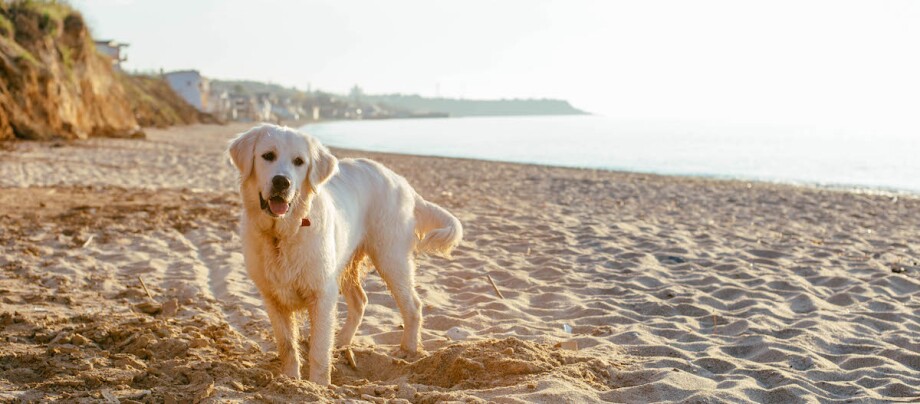
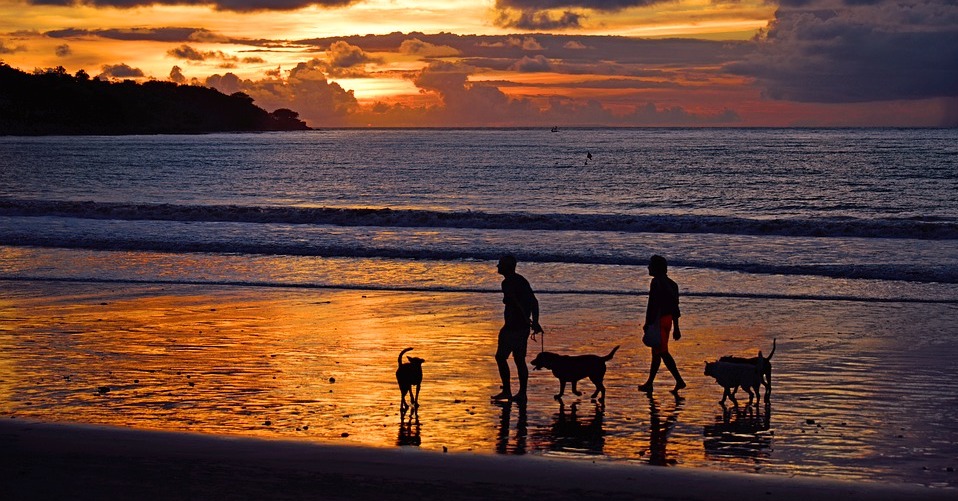
Before heading to the beach, find out which beaches allow dogs and whether lead, flea collar and/or muzzle requirements apply there. At the beach, make sure your dog has a shady spot (for example under a parasol), takes regular breaks and drinks enough water. Salt water isn't meant for drinking, and many dogs are sick afterwards.
When your dog swims in the sea, we recommend a long line instead of a retractable lead, as you can control it better. Caution is especially important with beach newcomers, as the dog doesn't know this type of water and may swim out too far without turning back.
Van life with a dog: how do you plan a trip in a van?
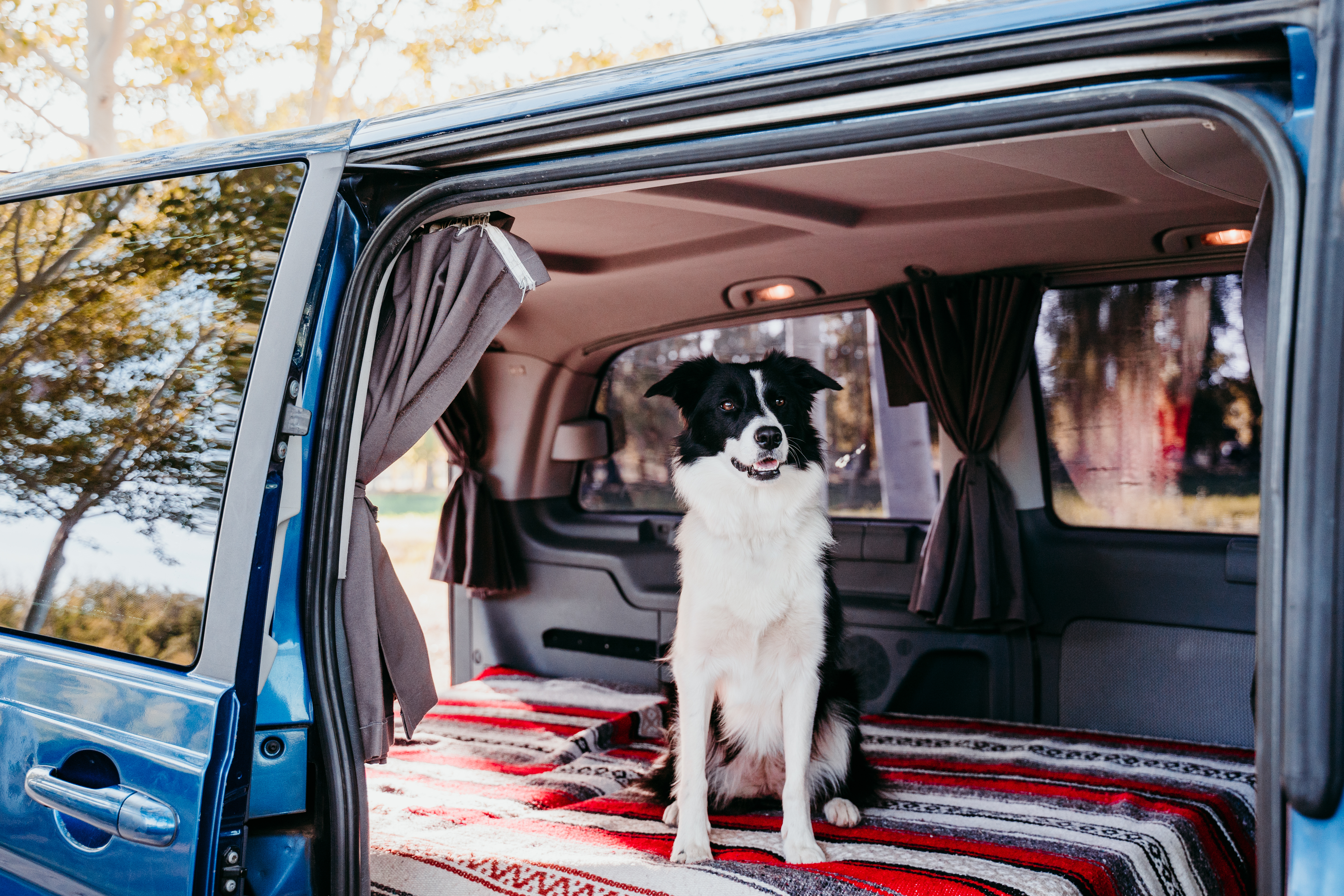
The idea of freedom, nature and life on wheels appeals to many, and it's even better with a dog. Van life with a dog is one of the most intense ways to travel: close to nature, unhurried and full of unexpected moments. But it takes good preparation.
Packing list for your dog
- Dog food
- Collapsible water bowl
- Travel harness plus a short and a long lead (long line)
- Dog bed or blanket for the van
- Tick remover and first aid kit
- Pet passport with valid rabies vaccination (mandatory for border crossings)
- Dog passport and muzzle
Packing list for you
- Camping stove, crockery, gas
- Water canister and filter
- Power bank or solar panel for power supply
- Clothing for changeable mountain weather
- Maps or offline apps (Komoot, Park4Night and others)
- Aluminium shade net for warm temperatures
Route planning: Switzerland isn't a country for spontaneous campers
Wild camping with a van is generally not allowed in Switzerland, but it is tolerated in some cantons, especially if you park away from others, are respectful and leave no trace. Use Park4Night or StayFree to find legal pitches. On official campsites, dogs are usually welcome, sometimes for an extra charge.
Popular dog-friendly and van life regions in Switzerland:
- Bernese Oberland (Lauterbrunnen, Grindelwald)
- Ticino (Verzasca Valley, Lake Lugano)
- Central Switzerland (Lake Lucerne, Rigi)
- Graubünden (Lenzerheide, Engadin, many hiking trails are dog-friendly)
Dog-specific points to know in Switzerland
- Dogs are welcome on trains and buses, but you have to pay for them (usually half the ticket price, except small dogs in a pet carrier).
- Picking up dog waste is mandatory. Almost every hiking trail has ‘Robidogs’ (waste bag dispensers).
- Watch out for cows and sheep in the mountains: don't walk through pastures with a dog that's off the lead.
- Ticks are active from spring to autumn, so pack a spot-on treatment or collar.
Conclusion: good planning pays off
Holidays with a dog can be incredibly wonderful if you make the right decisions in advance. With suitable accommodation, a well-thought-out destination and a little preparation, nothing stands in the way of your trip together, whether at the beach, in the mountains or in a van. If you're willing to invest a little more and show consideration for the environment and other people, you'll experience one of the best ways to travel, with the best companion of all: your own dog. Follow the rules and enjoy the freedom a trip gives you and your dog.