The hardest diet change is switching from dry food to BARF. For young and adult dogs there are several things to bear in mind for a successful transition, while for puppies it is easier. Here you'll find the switch step by step, the most common mistakes and tips for your BARF plan.
Why is switching adult dogs to BARF difficult?
For a dog's body, the change from dry food to BARF is the most difficult, because the two feeding methods are very different and the body suddenly has to adapt to completely different conditions. There are several reasons for this:
- Dry food always contains a large share of carbohydrates, as it usually consists mostly of grain, potatoes and the like. With BARF, fat is the main source of energy.
- Dry food is, as the name says, dry. As a result, the dog produces less stomach acid, because the carbohydrate sources and the consistency of the food inhibit acid production.
- To digest carbohydrates, a dog needs different enzymes than for proteins or fats. As BARF is higher in fat, the pancreas has to produce more lipase and less amylase.
- Dry food mostly uses a lot of slaughterhouse by-products rich in connective tissue as its meat source. These low-quality protein sources, which go hand in hand with the carbohydrate suppliers, are digested not in the small intestine but rather in the large intestine. With BARF, nutrient absorption shifts back towards the small intestine, as nature intended.
- Dry food usually contains many additives to make it last longer, look appealing and taste tempting to the dog.
- Feeding bones with BARF is also a change for the digestive system, as bones are hard to digest.
The dog's body therefore has to adapt its digestive processes to the new food. During the transition phase this can lead to diarrhoea, constipation, mucus in the stool or vomiting. This should settle after 1 to 2 days. If it doesn't, contact your nutrition consultant.
Switching from high-quality tinned food or home-cooked food is not quite as difficult, because the difference to BARF is smaller.
How do you switch to BARF step by step?
Step 1: Fasting
For young and adult dogs, skip at least one meal before the switch. This clears the digestive tract of the previous prepared food and makes your four-legged friend hungry, which helps, as some dogs initially refuse the new food.
Step 2: Meat and vegetables
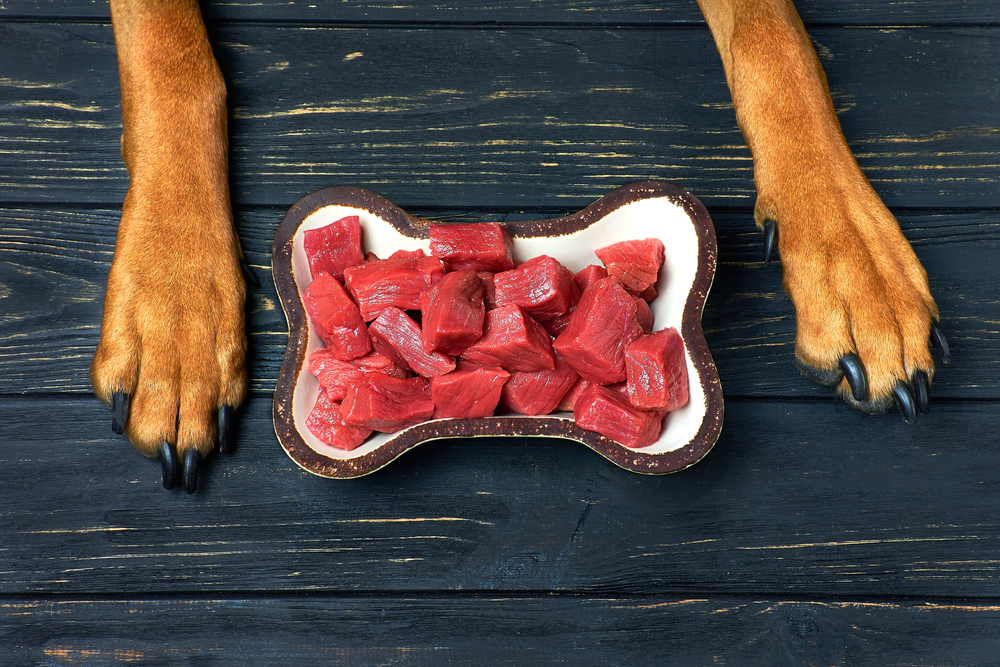
Once your four-legged friend has fasted, you can serve the first raw meal. It consists of one type of muscle meat (e.g. beef, chicken or horse) and one type of vegetable (e.g. carrots). During the switch, we recommend giving a probiotic at the same time to build up the gut flora.
Avoid treats and chews during the switch so that you get an undistorted picture of how the transition is going. If that isn't possible, we recommend natural options in small amounts, e.g. dried beef. You feed the meat and vegetable mix for around 7 days.
Step 3: Tripe
If your dog tolerates these meals without problems, you can add a new ingredient from day 8, for example tripe. Tripe is the hollow stomach organ of ruminants, has a good fat content, provides vitamins, trace elements and "good" bacteria, and helps keep teeth and gums healthy. It can also have a positive effect on digestion. You feed this mixture for up to 5 days.
Step 4: Raw meaty bones and offal
Once your four-legged friend has got used to this mixture too, offal and raw meaty bones are added. From now on you also feed the necessary supplements, and the plant portion can be split into vegetables and fruit. This step can take 1 to 2 days. You can find out what a balanced BARF ration for a healthy adult dog looks like in our guide BARF for dogs: what goes in the bowl?.
How does the switch work for puppies?
Compared with adult dogs, puppies have the advantage that their digestion adapts quickly. A long transition phase is generally not needed. If your puppy refuses the raw food at first, simply skip a meal so that they get hungry, then try again.

What are the seven most common BARF mistakes?
Mistakes can easily creep in, especially at the beginning. These are the seven most common stumbling blocks and tips on how to avoid them.
Mistake 1: Unbalanced feeding
A common misconception is that BARF consists solely of raw meat. Such a one-sided diet can lead to nutrient deficiencies. Make sure your pet's diet is balanced. Besides muscle meat, the bowl should contain offal, raw meaty bones, vegetables, fruit and high-quality oils. This variety ensures a comprehensive supply of nutrients.
Mistake 2: Missing or incorrect supplementation
Certain nutrients such as iodine or omega-3 fatty acids are not always present in sufficient amounts in raw feeding. Deliberately include supplements such as seaweed meal for iodine or salmon oil for omega-3 fatty acids in the feeding plan. Pay attention to the correct dosage to avoid over- or undersupply. Find out more in our guide BARF supplements.
Mistake 3: Feeding unsuitable bones
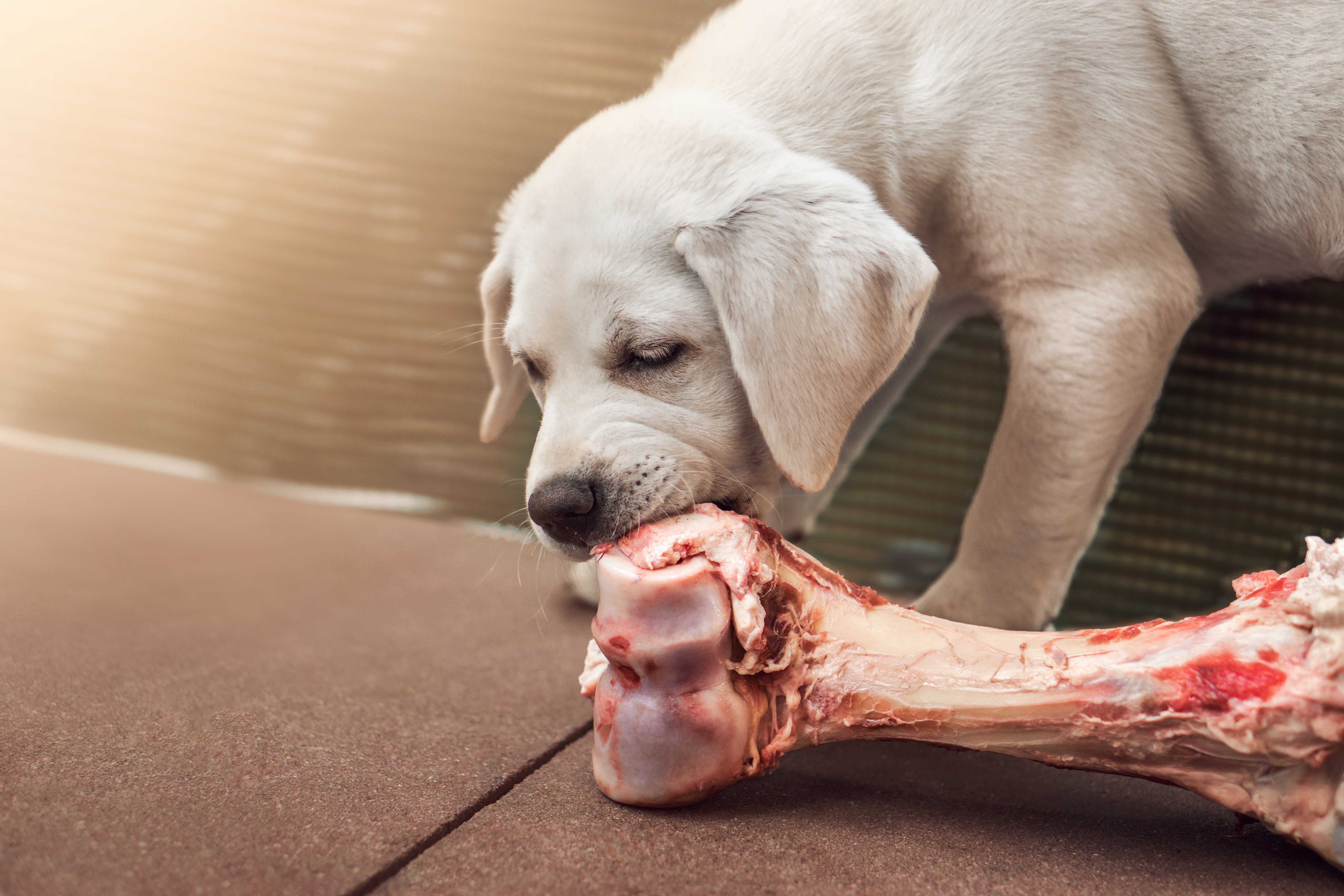
Not all bones are suitable for raw feeding. Cooked bones can splinter and cause injuries, and bones that are too hard can damage teeth. Use only raw, meaty bones that your pet can chew and digest without problems, and choose them to suit their size and chewing strength. You'll find more in our guide BARF for dogs.
Mistake 4: Switching food too quickly
An abrupt change from prepared food to BARF can put a strain on the digestive tract and lead to diarrhoea or vomiting. Make the switch gradually, as described above: start with easily digestible meat and add further components bit by bit.
Mistake 5: Neglecting hygiene
Handling raw meat requires particular care so that no germs spread. Stick to strict kitchen hygiene. Clean work surfaces, utensils and hands thoroughly after preparation, and store the meat chilled and separate from other food.
Mistake 6: Misjudging portion sizes
Misjudging the amount of food can lead to your pet being over- or underweight. Work out the optimal amount based on your pet's weight, age, activity level and state of health. Monitor their weight regularly and adjust the portions if necessary.
Mistake 7: Lack of variety in the diet
A monotonous diet can lead to nutrient deficits and boredom. Provide variety in the bowl and alternate between two to three different types of meat, offal and plant components. This way your pet gets all the nutrients they need and mealtimes stay exciting.
When does a BARF plan really make sense?
Getting started with BARF raises questions for many dog and cat owners. What amounts are right? What does my pet really need? And how do I make sure nothing important is missing? That's exactly why a BARF plan from a nutrition expert makes particular sense for beginners. It gives you clear guidance, removes uncertainty and helps you get everything right from the start.
In theory BARF often sounds simple, but in practice it is considerably more complex, because every animal has individual needs. Many owners start on their own or follow generic plans from the internet. That can work well, but it often leads to imbalances, such as a lack of nutrients like calcium or taurine, or an incorrect composition of the rations. Such mistakes often don't show straight away, but can affect health in the long term.
In which situations is a BARF plan particularly useful?
- For beginners: You know exactly what belongs in the bowl, in what amounts and why.
- For puppies and kittens: They are still growing and have very sensitive nutritional needs.
- For health problems: With allergies, digestive complaints or kidney disease, feeding should be adjusted specifically.
- For weight: Both overweight and underweight can be better managed with an individually tailored plan. The amount of food and its composition are adjusted so that your pet is optimally supplied without taking in too much or too little energy.
What applies to cats?
Particular caution is needed with cats. They have very specific nutritional requirements, above all regarding taurine. Feeding mistakes lead to deficiency symptoms more quickly here than in dogs. That's why a professional plan is especially recommended for cats. Find out more in our guide BARF for cats.
Conclusion: success with BARF comes from knowledge and care
Feeding BARF requires a certain amount of knowledge and planning, but the effort is worth it. If you avoid the mistakes mentioned, you lay the foundation for a healthy, species-appropriate diet for your darling. A BARF plan from a nutrition expert is not compulsory, but it gives you confidence, especially at the beginning, so that you provide your pet with optimal nutrition from day one and feed with peace of mind.
The BARF book by Nadine Wolf also offers good insights. Would you like to feed BARF yourself but don't yet feel confident going it alone? Then our certified nutrition consultants specialising in BARF according to Swanie Simon will be happy to create a personal and easy-to-understand BARF plan for you.
Learn more about BARF: