Rabbits and guinea pigs can live outdoors all year round, as long as the enclosure and hutch are right. You'll learn how to make outdoor housing safe, how to winterproof the hutch and how to move your pets back outside in spring.
Can rabbits live outside all year round?
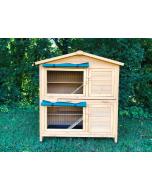
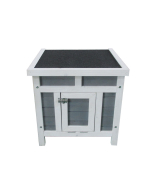
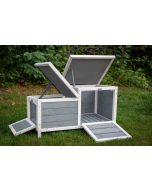
In principle, yes. Rabbits and guinea pigs can be kept outdoors all year round. It's important that your animals have access to a well-insulated, spacious hutch or small pet house. Make sure the shelter is as protected from the wind as possible and sits in a shady spot. Even rodents can suffer circulation problems or heatstroke on warm days.
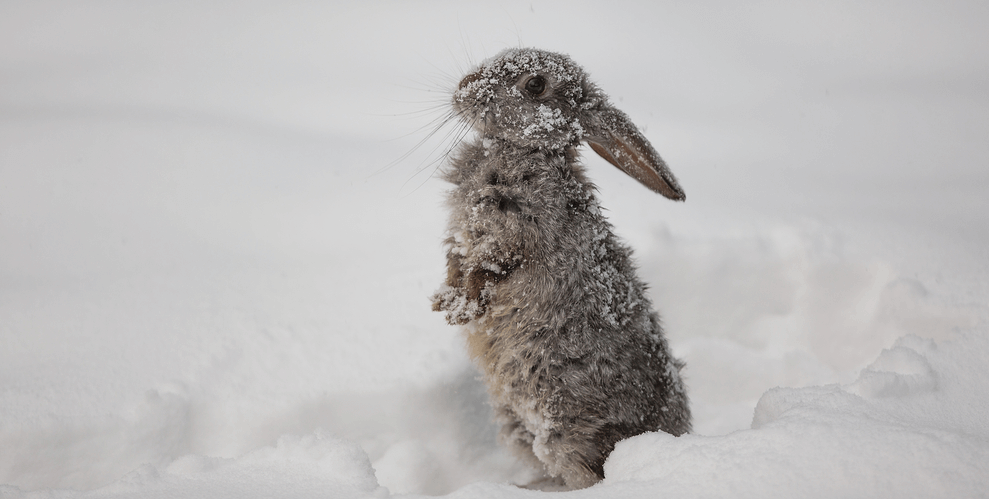
Rabbits have a thick coat, which really helps them in winter. They actually prefer it cold to warm, and even snow isn't a problem; they love hopping around in it. It's heat and sudden temperature changes that bother them more. So make sure you don't keep bringing them in from outside into the warmth and then back out again. The animals simply can't cope with that. That said, a winter coat alone isn't enough in sub-zero temperatures and snow, so your animals need your support.
How do you set up a safe outdoor enclosure?
There are a few things to bear in mind with outdoor housing, mainly to protect your small pets:
- Shady spots are important: Trees, shrubs or potted plants give you a way to create shade. Just make sure the plants in the enclosure are suitable for your animals, for example hazel, fruit bushes and fruit trees. You can often buy a sun shade or wind shield to match your outdoor run. We advise against covering the enclosure with thick woollen blankets or tarpaulins, as they trap the heat. Light-coloured cloths that allow good air circulation are a better choice.
- Safety from above: For balcony housing, ready-made runs or boards stop your rabbits or guinea pigs from falling off. Whether in the garden or on the balcony, runs should also be protected from above, for example with a net. This keeps cats and birds of prey out, and your small pets can't jump over the mesh.
- Safety from below: Rodents love to dig. For security, there are runs with escape protection. You can also offer a digging area in the middle of the enclosure as a precaution, or lay paving slabs along the edge of the fence.
- Create places to retreat: Use the hutch or small pet house, plus further small houses, caves and tunnels to create quiet spots.
- Keep them entertained: Add variety to the enclosure. Whether ready-made products, DIY builds or items from nature, your imagination is the only limit.
How do you get rabbits safely through the cold season?
As soon as cold temperatures are on the way (usually from September or October), you should start preparing for winter. There are two options.
Option 1: Bring the rabbits indoors
You can move the hutch indoors, for example into a garage or a shed. Here too, you need to avoid big temperature swings. You'll find out below how to bring your animals back outside in spring.
Option 2: Winterproof the rabbit hutch
In the wild, rabbits cope with the cold quite well and retreat into burrows and warrens to defy freezing temperatures. They should have the same option in their hutch. These measures help:
- More bedding and hay: Fill the hutch with more bedding and hay. This insulates the hutch and lets the animals build themselves a warm "nest". A thick layer of small pet bedding is ideal; at least 8 cm is recommended. Add a generous layer of straw or hay on top of the bedding. Check again after a short while whether the rabbits have scattered the hay everywhere and need a top-up. Hay and straw also give your animals something to nibble and a warm, soft bed.
- Hemp mat or rodent mat: You can put the hemp mat under the bedding. It insulates from below, keeping paws warm and the floor dry. It also works as a cosy mat inside and on top of a little house. Rodent mats are especially popular with rabbits and, together with bedding and hay, keep the hutch snug and warm.
- Cover tarpaulin and insulation on the outside: Depending on how the hutch is built, for instance if the walls are thin, you can insulate it from the outside with special cover tarpaulins, polystyrene boards, woollen blankets or a carpet. These materials are available from any builders' merchant and are easy to cut to size. Important: the tarpaulin is mainly there to protect against moisture, as the hutch must stay dry to prevent colds. However, never wrap it up completely, because rabbits need good ventilation.
- Raise the hutch: To stop moisture seeping through the floor, for example from snow, you can place the hutch on stilts, bricks or large stones. Many small pet hutches already have "legs" and only need raising if necessary. It also makes sense to seal the base from the outside with a thick sheet so that moisture can't get into the wood.
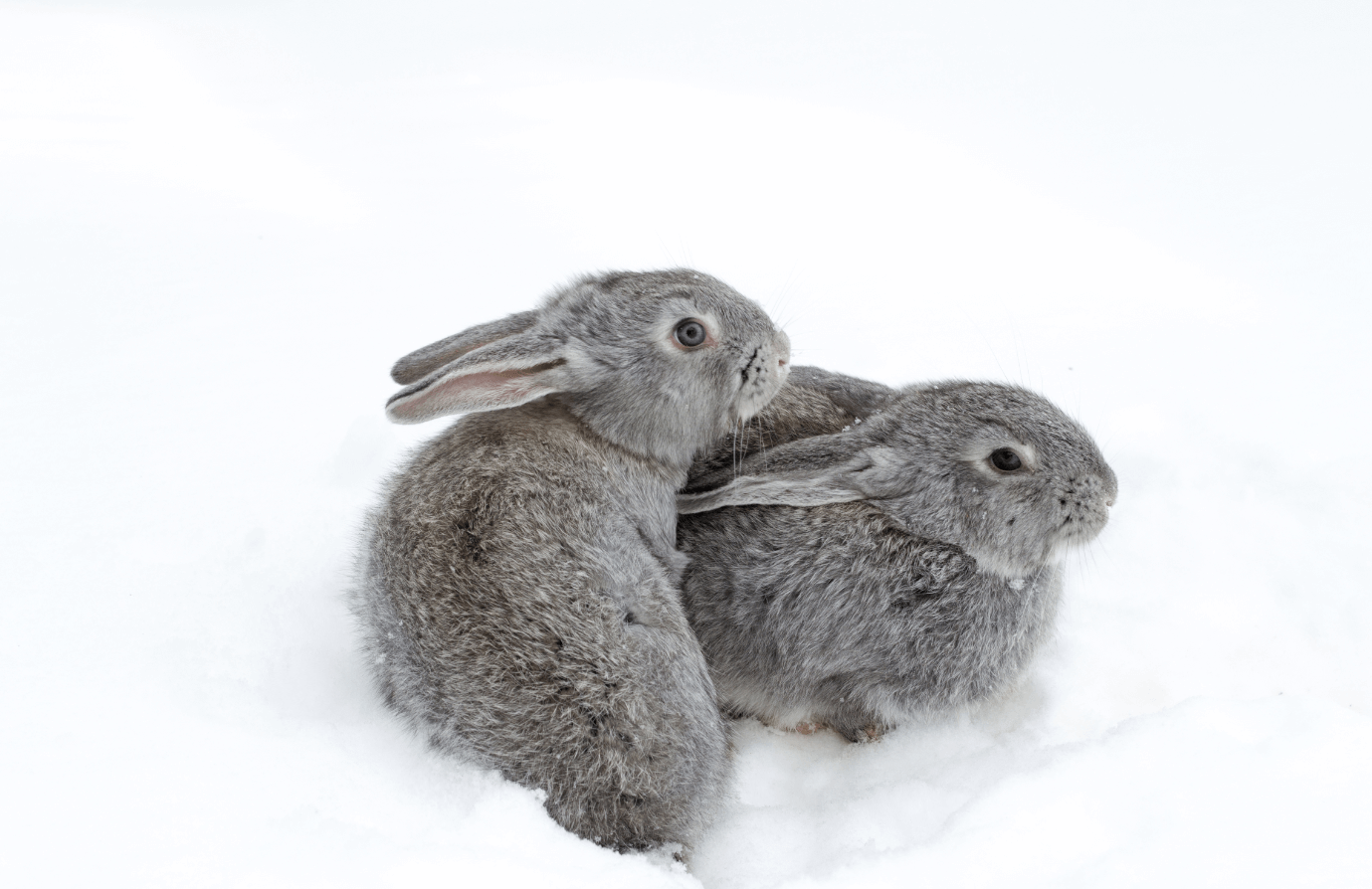
Why do exercise and company keep rabbits warm?
Free run isn't only important in summer. To keep rabbits and guinea pigs warm in winter, insulation helps, but so does exercise. Give your animals secure access to several square metres, a large run with plenty of structure, ideally during the day and at night.

Rabbits and guinea pigs are social animals. There should be at least two, and three or four is better, both for harmony and for snuggling up and keeping warm in winter. Whether you keep two animals or four, there should always be more space available than just the minimum area. Before you get new companions, always talk it over with an experienced specialist.
What should rabbits eat and drink in winter?
The right diet also keeps them warm. Fresh seasonal vegetables provide plenty of vitamins. Always introduce any new vegetables your animals don't know yet in small amounts first. Pumpkin and all kinds of cabbage can be fed, just not in excess. At least 70% of the diet should be leafy greens and hay. As a supplement, you can offer carrots, apple, cabbage leaves, dried flowers and herbs. You should generally avoid grains and pellets. In very cold temperatures, you can offer a little something extra for energy now and then, but a wide choice of fresh seasonal vegetables and plenty of hay remains the best option.
In the cold, water freezes quickly in conventional water dispensers and automatic drinkers. Here's what helps:
- Don't offer hot water, as it can quickly lead to health problems. Lukewarm water is perfectly sufficient.
- Change the water 2 to 4 times a day so that it never freezes completely, your animals always have enough and it stays clean.
- You shouldn't offer drinking bottles in freezing temperatures. Large ceramic bowls are a better choice: because of the larger volume of water, it takes longer to freeze, and the rabbits have more time to drink. To keep the water moving, you can float a ping-pong ball or a light plastic ball on the surface.
- If nothing else works, use a heated drinker. The built-in heating keeps the water at a temperature that's pleasant for rabbits.
One more tip: remove wet patches of urine every day. They don't just make the hutch dirty; the damp spots can also give your rabbits a chill.
What helps in very cold winter weather?
In a very cold winter with sustained temperatures well below -10°C, a thick coat and an insulated hutch aren't enough. Your rodents then need an additional source of warmth. For this, you can use a heat pad, for example. You warm it briefly in the microwave, and it stays warm for quite a long time afterwards. If you put a pad like this in the hutch, rabbits like to sit on it and enjoy the warmth.
It's important that the pad doesn't fill the whole hutch. Your animals should always have the choice of whether or not to lie on the heat pad. Also, don't use an electric heating mat. Since rabbits gnaw on everything, there's a risk of electric shock.
When and how do you take rabbits back outside in spring?
Moving them back outside is basically the same as overwintering, just in reverse. It's important that the weather has settled into a constant temperature. Many people wait until the Ice Saints (Eisheiligen) are over, which usually last from 11 to 15 May. During these days, the weather can turn really cold again, almost like winter. For animals that have spent the winter indoors, this can be a big temperature shock, so you should wait until these days have passed.
Once it's 12 to 15 degrees during the day again, your animals can stay outside. At night, it's advisable to keep them indoors as long as temperatures are below 12 to 15 degrees. If it's around 12 degrees at night too, they can stay outside. It's important that they spend the night in an outdoor hutch, ideally, so that they're safely protected from predators.

If your animals aren't used to being outdoors yet, it's best to get them used to it gradually. Whether it's a balcony or an open garden, it's best to start in warmer temperatures and take your rodents outside for a few hours at a time. You can also get them used to fresh grass and herbs beforehand. That way the change isn't too abrupt, and you avoid health problems.
Should guinea pigs and rabbits be kept together?
Although the two small pets are very similar, they also have key differences. For one thing, they have a different daily rhythm: rabbits are most active at dawn and dusk, whereas guinea pigs are active during the day. For another, their body language isn't the same: a lowered head and flattened ears are a friendly gesture in a rabbit, but a threatening posture in a guinea pig. Seen this way, they belong in separate areas. If you still want to keep them together, we recommend separate retreat areas for each, as well as an appropriate number of companions of their own species.
Further information
Sources: kaninchen-haltung.com, kaninchenstallwelt.de. Image sources: Shutterstock, kaninchenwiese.de