Itching, diarrhoea, flatulence or red patches of skin: many dogs and cats struggle with intolerances or allergic reactions. A common trigger is their food. Here you'll find out how to tell an allergy from an intolerance, when a grain-free diet makes sense and how an elimination diet with BARF works.
Why is there grain in pet food?
Our dogs and cats descend from wild animals that were bred over the centuries into tame pets. In the wild, they ate rodents, birds or larger mammals, so their diet was determined by meat. Even so, many dog and cat foods today contain a considerable amount of grain. What are wheat, maize, soya and the like doing in your four-legged friend's bowl? Grain is much cheaper than fresh meat, which is why the industry often uses it as a filler.
You might say: as long as my pet is full, everything is fine. It's not that simple. The digestive tract of dogs and cats is not designed for a high proportion of grain. In sensitive animals, grain can lead to digestive problems, diarrhoea and flatulence. Certain types of grain can also trigger itching or hair loss in some cases.

Allergy or intolerance: what's the difference?
Even though the symptoms are similar, the cause is often different:
| Allergy | Intolerance |
|---|---|
| The immune system overreacts to certain proteins. | The body cannot process certain substances properly. |
| Typical: itching, ear infections, red skin | Typical: diarrhoea, flatulence, vomiting |
| Common with beef, chicken, grain, milk | Common with lactose, fat, artificial additives |
A clear distinction is not always easy. In both cases, though, the aim is to identify and avoid the food ingredients that trigger the problem. With BARF you have a clear advantage here: you know exactly what goes into the bowl and can observe step by step what your pet reacts to.
Which signs point to an allergy?
You should take these signals seriously:
- Skin rashes and itching: One of the most common signs. Your dog scratches, licks or bites more often at their paws and belly. Redness, flaking and skin irritation can also appear.
- Ear infections: They show up as redness, swelling, discharge and increased scratching or rubbing of the ears, and often recur.
- Gastrointestinal problems: Vomiting, retching after eating, soft stools, diarrhoea, flatulence or stomach pain.
- Coat: increased hair loss or a dull coat.
- Changes in behaviour: irritability, restlessness or sleep disturbances.
If you suspect your pet is suffering from an allergy, visit a vet. They can give an accurate diagnosis and recommend a treatment plan.

What does the vet say about allergies and myths?
Around 10 to 15% of dogs show symptoms of allergies or intolerances. We spoke to Dr. med. vet. Gregor Berg about how they develop and how to prevent them.
How do you tell a true allergy from an intolerance?
Dr. Berg explains: “A true allergy is a pathological immune reaction, whereas an intolerance has less to do with the immune system and is more likely due to individual factors such as enzyme deficiency. With an intolerance, the enzymes needed to digest certain foods are missing, which can lead to problems such as diarrhoea. An allergy, on the other hand, involves the immune system and can also cause symptoms in places that don't come into direct contact with the allergen, such as itching in the case of food allergies.”
Do exotic proteins such as ostrich or horse help against allergies?
Many dog owners assume that allergies are always linked to the protein, and switch to exotic proteins. Dr. Berg on this: “Most allergies are triggered by proteins, because the immune system recognises them as harmful invaders. Feeding exotic proteins does not prevent allergies, as the frequency of exposure increases the likelihood of an allergy. How often allergies occur depends not on the type of meat, but on how often an animal is fed it. Food allergies account for about 10% of all allergies, while allergies to environmental triggers or ectoparasites are more common. That's why the search for the right food to relieve symptoms can often be down to causes other than food allergies.”

Which foods and additives can promote allergies?
Dr. Berg: “How often an animal comes into contact with certain protein structures is the main factor in allergies. Allergies can be linked to the prevailing diet in different countries. Some proteins such as fish, legumes, nuts, cow's milk and eggs have a higher allergenic potential in humans. Studies on pets are limited, but certain additives such as binders are often suspected. However, these are mostly indigestible carbohydrates and are more likely to cause an intolerance than an allergy.”
Dr. med. vet. Gregor Berg studied at LMU Munich, earned his doctorate at the Medical Small Animal Clinic and deepened his expertise in internal medicine, emergency medicine and surgery in Chemnitz. He later moved into food inspection and founded a veterinary practice for nutritional advice. In 2014 he founded Dr. Berg Tiernahrung GmbH and has since been developing food varieties based on the latest scientific findings.
When does a grain-free diet make sense?
If your dog or cat has chronic digestive problems, itching, hair loss or allergies, it's advisable to cut out any grain that triggers a reaction. Bear in mind, though: grain is only one of several possible triggers. Soya proteins, colourings or preservatives can also be responsible, and most food allergies are triggered by proteins. An elimination diet helps you find out exactly what your pet reacts to. Numerous food producers also offer 100% grain-free main food that is quick and easy to feed:
For dogs:
- Dry and wet food from Wolfsblut
- Dry food with chicken or reindeer from Robur
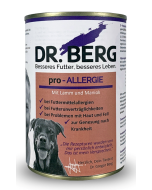
- Dry food from Dr. Berg
- Wet food from Dr. Berg
- Stone-oven baked dry food from Leiky
For cats:
How does an elimination diet with BARF work?
The elimination diet is considered the “gold standard” for identifying intolerances. Here's how it works:
- Feed only one type of meat that your pet has never had before (e.g. horse, goat, rabbit).
- No supplements, no offal, no vegetables, just meat and, if needed, a suitable oil.
- Stick with it for at least 6 to 8 weeks, even if the symptoms disappear sooner.
- Afterwards, introduce new ingredients slowly and one at a time, at intervals of 5 to 7 days.
- If your pet reacts to an ingredient, pause immediately and make a note of it.
Tip: keep a food diary. Use it to record when you feed what and how your pet reacts.
Which types of meat are suitable for allergies?
For an elimination diet or an allergic tendency, it's best to start with lean types of meat that are rarely fed. Horse, kangaroo, rabbit, goat and game are particularly suitable. Exotic proteins serve a diagnostic purpose here. As Dr. Berg explained above, they do not prevent allergies.

Why does BARF make sense for allergies?
Many allergies are caused by hidden ingredients in ready-made food, such as colourings and preservatives, binders, sugar or poor-quality protein sources. With BARF, you can consistently rule out these irritants. For allergies, this gives you the following benefits:
- only natural ingredients
- control over every single component
- no hidden additives
- no unnecessary sugar and no grain
- better support for skin and gut
Especially in combination with gut-friendly supplements such as coconut oil or probiotics, you can work specifically against the allergic imbalance. This way the food can be tailored completely to your pet's individual needs.
If you decide on raw feeding, make sure you know what your pet needs for a species-appropriate diet. Cats, for example, don't need fruit, vegetables or tripe, whereas these components are necessary for dogs. You'll find the details in the guides BARF for dogs and BARF for cats. Books on BARF for dogs and cats will help you get started, as will advice from a pet nutrition expert. Are you just starting out? Then read the beginner's guide What is BARF?.
Is grain-free food also a good idea for healthy dogs and cats?
For a healthy pet that tolerates its food well, grain in the diet is generally not harmful. However, grain is relatively low in nutrients for dogs and cats and, in large quantities, serves mainly as a cheap filler. If a 100% grain-free diet isn't an option for you, still look for a low grain content in the main food. The nearer the front a grain appears in the composition, the more of it the food contains. The gluten-free dog food from Robur and the cat food from Bozita, for example, are very low in grain and therefore easy to digest.
Conclusion: BARF brings clarity to the bowl
Allergies and intolerances are often detective work. With BARF, you're not only giving your pet high-quality fresh food, you also have full control over every single ingredient. That makes feeding more plannable and more individual. With a well-structured elimination diet, you can specifically help your pet avoid triggers and ease the strain on their body.